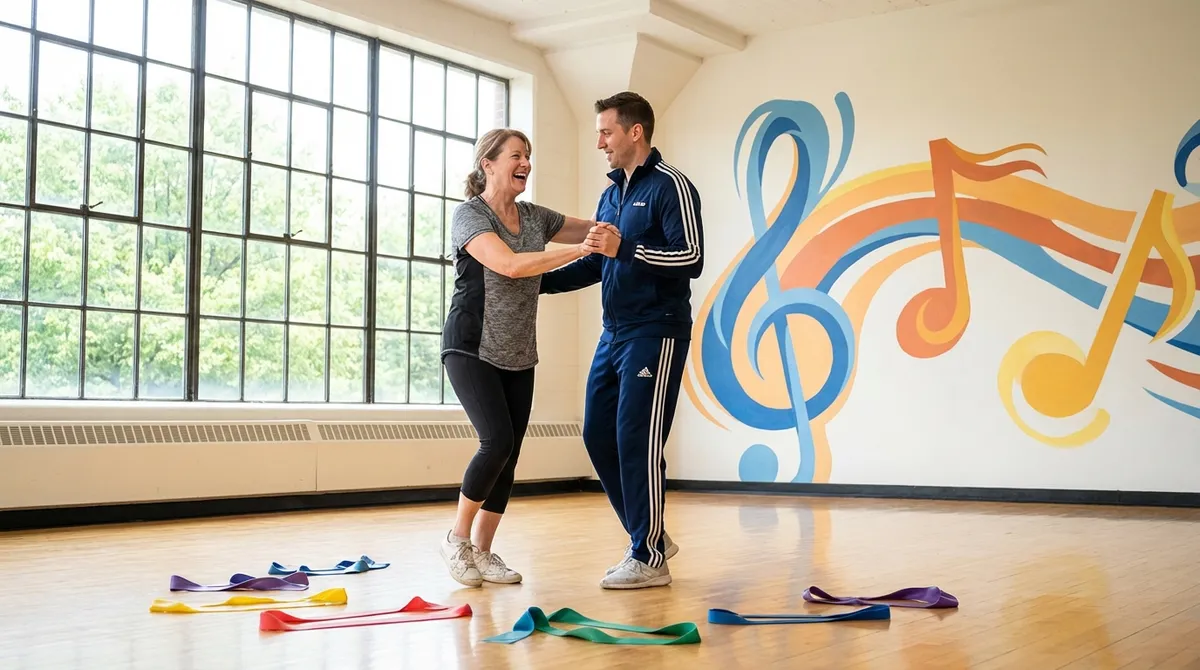
This is your space to rediscover trust in your body, at your own pace. Below are supportive insights and five wellness tips to help you feel more confident, grounded, and hopeful on your physical therapy journey.
Seeing Physical Therapy as Partnership, Not Punishment
Physical therapy can feel intimidating at first—new exercises, unfamiliar terms, and the worry that you might “do it wrong.” It helps to reframe therapy as a partnership instead of a test. Your physical therapist isn’t judging your progress; they’re learning your story, your limits, and your goals. The aim isn’t perfection—it’s progress that makes your daily life easier and more comfortable.
You’re allowed to speak up if something feels off, confusing, or too intense. You’re allowed to ask, “Why this exercise?” or “What should I feel when I do this?” Understanding the purpose behind each movement can make therapy feel less like a chore and more like a meaningful investment in your future self.
When you start to view physical therapy as a collaborative process, it becomes easier to show up, ask questions, and celebrate the gradual changes that add up over time.
Tip 1: Turn Your Home into a Gentle Support System
Healing doesn’t only happen in the clinic; it continues in the spaces where you live your everyday life. A few small adjustments at home can reduce strain and make it easier to stick with your plan:
- Create a simple “movement spot”—a mat or clear area where you keep any bands, pillows, or tools you use for your exercises. Making them visible lowers the barrier to getting started.
- Adjust your environment to support your body: consider supportive chairs, proper desk height, or using pillows to keep your spine or joints comfortable.
- Break household tasks into shorter bursts. Instead of cleaning everything at once, do one small area and pause to check in with your body.
These aren’t shortcuts—they’re smart strategies. When your home supports your healing instead of working against it, every day becomes a little more manageable.
Tip 2: Measure Progress Beyond the Stopwatch
It’s easy to focus only on numbers: how many reps, how long you can hold a pose, how many sessions you’ve completed. While those are helpful, they don’t tell the whole story of your progress. Broaden what “getting better” means:
- Notice functional wins: Is it easier to get out of bed? Can you stand longer while cooking? Do stairs feel slightly less intimidating?
- Track how your body feels before and after sessions. Perhaps your pain is the same, but your stiffness decreases, or your confidence in a movement improves.
- Pay attention to your mood. Feeling more hopeful or less anxious about movement is real, measurable progress—even if you can’t see it on a chart.
You’re not a set of data points; you’re a person learning to move with more freedom. When you recognize all the ways progress shows up, you give yourself credit you truly deserve.
Tip 3: Build Rest into the Plan, Not as an Afterthought
Pushing through pain and fatigue can feel like a badge of honor—but your tissues, joints, and nervous system need recovery just as much as they need activity. Rest is not you “falling behind”; it’s you protecting the work you’ve already done.
Consider rest part of your physical therapy plan:
- Schedule intentional pauses between exercises to check in with your breath and tension levels.
- Respect your “flare-up days.” If your therapist approves, you might do a lighter version of your routine or focus on gentle mobility instead of intensity.
- Prioritize sleep as carefully as you prioritize exercise sessions. Healing processes in muscles and connective tissues are significantly influenced by quality rest.
Allowing rest doesn’t mean you’re giving up—it means you’re honoring your body’s healing pace, which is one of the most powerful choices you can make.
Tip 4: Let Movement Feel Like You, Not Just Like Rehab
If every movement you do feels clinical or rigid, it can be hard to stay engaged. When possible (and with guidance from your therapist), look for ways to blend therapy principles into activities that feel more like you:
- If you love music, do your prescribed stretches to a favorite playlist.
- If you enjoy being outdoors, see if some of your walking or balance exercises can move outside, where the environment lifts your mood.
- If you miss a sport or hobby you used to enjoy, ask your therapist what tiny, safe steps might eventually lead you closer to it.
Bringing a little bit of joy, personality, and creativity into movement can transform it from “one more thing on the list” into something you’re more willing to show up for.
Tip 5: Protect Your Mind as Carefully as You Protect Your Joints
Physical progress is deeply connected to emotional resilience. Feeling discouraged, impatient, or afraid is completely human—especially when you’re dealing with pain, limitation, or a long recovery. Caring for your mental and emotional well-being is part of your therapy, not separate from it.
A few ideas to support your mindset:
- Practice “neutral self-talk” when positives feel hard to believe. Instead of “I’ll never get better,” try “I’m doing what I can today to support my healing.”
- Share honestly with your therapist about any fears—like reinjury, setbacks, or losing independence. They can often adapt your plan and offer reassurance grounded in your actual condition.
- Consider brief check-ins with a counselor or support group if your recovery is long or complex. Emotional support can ease the stress that often amplifies physical pain.
Your thoughts won’t magically heal an injury—but a calmer, supported nervous system can make it easier for your body to do what it’s designed to do: repair, adapt, and grow stronger over time.
When Progress Feels Slow, Remember What You Can’t See Yet
There will be days when it feels like nothing is changing. This doesn’t mean you’re failing or that therapy isn’t working—it often means the progress is happening at a level you can’t fully see yet. Muscles are relearning patterns. Joints are regaining small degrees of motion. Your brain and nervous system are slowly building trust in movements that once felt threatening.
On the hardest days, it may help to:
- Look back at where you started: your range of motion, pain levels, or daily limitations.
- Ask your therapist to help you identify specific improvements they’re noticing clinically.
- Remind yourself that healing is rarely a straight line; it’s a series of forward steps, pauses, and recalibrations.
You don’t have to feel inspired every day to keep going. Showing up—imperfectly, inconsistently, but still returning—is its own form of strength.
Conclusion
Physical therapy is more than a set of exercises—it’s a journey of learning to live in your body with a little more ease, trust, and hope. You’re allowed to be tired. You’re allowed to feel unsure. And you’re still fully capable of making meaningful, steady progress in ways that fit your real life.
Let your environment support you, celebrate the small gains, honor your need for rest, bring a bit of yourself into every movement, and care for your mind as gently as you care for your muscles and joints.
You’re not starting from zero—you’re starting from experience, courage, and a willingness to try again. That’s enough. And it’s a powerful place to begin.
Sources
- American Physical Therapy Association (APTA) – Benefits of Physical Therapy – Overview of how physical therapy supports recovery, mobility, and pain management
- Mayo Clinic – Physical Therapy and Rehabilitation – Explains what to expect from physical therapy and common treatment approaches
- Cleveland Clinic – Pain Management and the Role of Physical Therapy – Describes how physical therapy helps with various conditions and functional goals
- National Institutes of Health (NIH) – The Importance of Physical Activity for Health – Discusses movement and activity as key elements of overall health and recovery
- Johns Hopkins Medicine – Coping With Chronic Pain – Provides strategies for managing the emotional and mental aspects of ongoing pain and rehabilitation