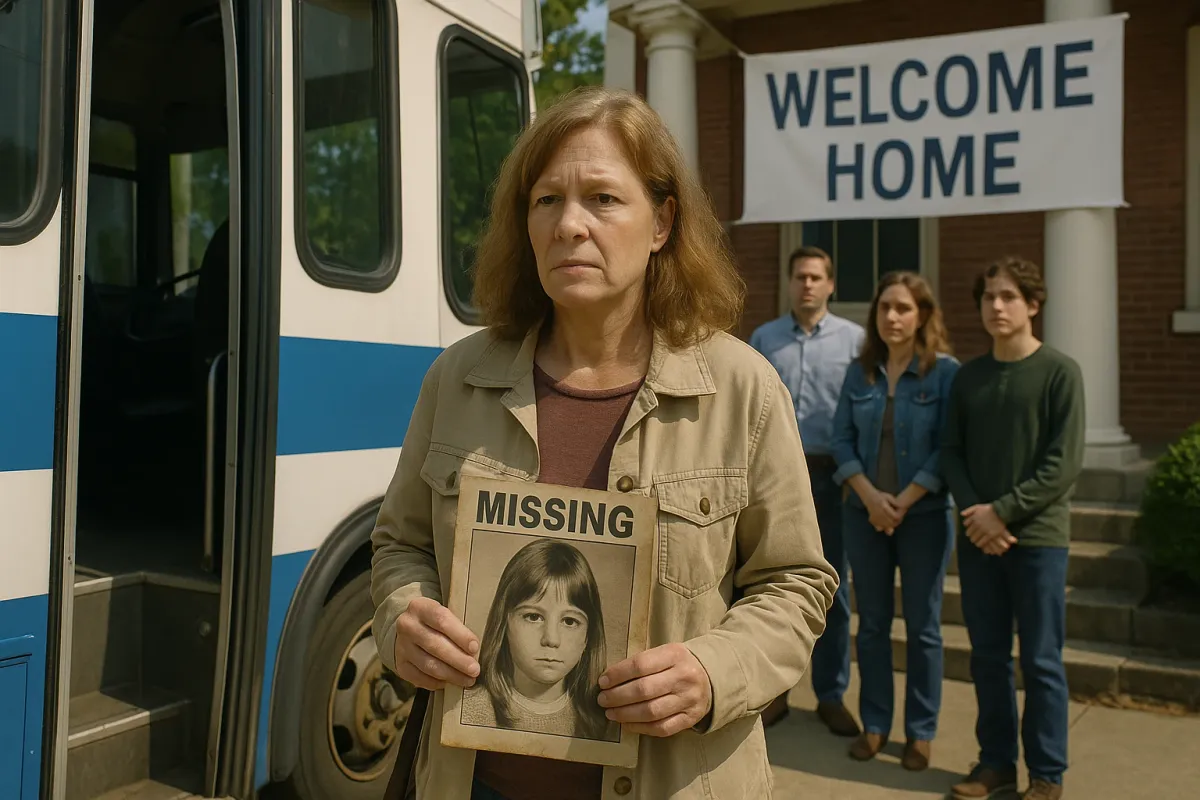
For many of us, recovery—whether from illness, addiction, burnout, trauma, or years of self-neglect—can feel just as distant and impossible as that reunion once did. Maybe you’ve gone months, years, or even decades feeling “lost” from yourself. This story is a living reminder: time can pass, life can twist, but healing and reconnection are still possible.
Let’s use this real-world reunion as a gentle guide. If a family can hold on for over 40 years and still find their way back to each other, you’re not “too late” to find your way back to yourself.
1. Let This Reunion Be Proof: You Are Never “Too Far Gone”
That Kentucky mother didn’t stop hoping, even when the world would have understood if she had. There were no guarantees, no weekly updates, no clear roadmap—just the quiet choice to keep believing her daughter might still be out there. Then, decades later, there she was.
Your recovery might feel just as far away. Maybe you’re grieving the years you feel you’ve “wasted” in unhealthy patterns, toxic relationships, or numbing habits. Maybe you’ve relapsed, restarted, and feel embarrassed to try again. Remember this: forty years is a long time, yet healing still found its way home. Your brain can still learn, your body can still repair, and your life can still shift—in small, meaningful ways that add up. You do not need to undo every past choice to deserve a better chapter now. You only need to be willing to start again today.
2. Build Your Own “Search Team”: Recovery Is Not a Solo Mission
That miraculous reunion didn’t happen in a vacuum. It took people who kept looking, kept asking questions, kept examining records, and kept caring, even when the trail seemed cold. In the same way, personal recovery is rarely something we do completely alone. We often need our own version of investigators: people who help us track patterns, search for missing pieces, and guide us out of old cycles.
Your “search team” might include a therapist, doctor, support group, spiritual mentor, or trusted friend who listens without judgment. It could be an online recovery community where you finally feel understood. It might be a coach who helps you untangle health habits one step at a time. Ask yourself: Who do I want on my side as I “find” myself again? Start with one person you can text or call when things feel heavy. Giving someone permission to check in on you is not weakness; it’s wisdom. Every recovery story is stronger when there are witnesses who refuse to let you disappear.
3. Grieve the Lost Time—Then Gently Turn Toward What’s Still Possible
When that mother finally hugged her daughter after four decades, there was joy—but also an ocean of lost birthdays, missed school photos, and milestones that never happened together. Big reunions carry big grief alongside the happiness, and both are valid. Recovery works the same way. As you start healing, you may become acutely aware of what you missed: years of energy drained by addiction, relationships damaged by anger, goals you set aside because you were simply trying to survive.
You’re allowed to be heartbroken about that. You’re allowed to say, “I wish this had been different.” That’s part of healing, not a failure. But once you’ve honored that grief, let your focus gently pivot to what is still alive and available to you now: the conversations you can finally have, the habits you can start building today, the boundaries you can now set, the joy you can still cultivate. Recovery doesn’t erase the past—it teaches you how to live with it without letting it define the rest of your life.
4. Make Your “Homecoming” Practical: Tiny, Steady Habits That Bring You Back to Yourself
The reunion in Kentucky was a single stunning moment, but it will be followed by thousands of everyday choices: how to rebuild trust, how often to talk, how much to share, how to heal together. In recovery, the dramatic breakthrough—quitting, deciding, promising—is powerful, but it’s the ordinary days that shape your healing.
Try choosing one or two tiny “homecoming” habits that help you return to yourself:
- Body check-ins: Once a day, pause and ask, “What does my body need right now—water, rest, movement, or food?” Then give it one small thing.
- Emotion naming: When you feel overwhelmed, practice saying out loud or in writing, “Right now I feel ___, and it makes sense that I feel this way.” This softens self-judgment.
- Gentle movement: A 10-minute walk, a few stretches by your bed, or simply standing by an open window can signal to your nervous system that it’s safe to settle.
- Micro-goals: Instead of “I’ll completely change my diet,” try “I’ll add one nourishing thing to my day,” like a piece of fruit or a glass of water before coffee.
- Evening reset: End the day with one grounding action—a short journal entry, a calming playlist, or listing three things you did right today, no matter how small.
Just as that family is slowly building a new relationship over time, you can slowly rebuild trust with yourself. Each small habit is you saying: “I’m not abandoning you again.”
5. Anchor Your Recovery in Hope, Not Perfection
Forty years of uncertainty didn’t end with a perfectly tidy, movie-style “happily ever after.” Real reunions are messy. There will be awkward conversations, conflicting memories, and emotional overload. But underneath all of that is something bigger: the belief that a fractured story can still move forward.
Your healing will be messy too. You will have days that feel like you’re right back at the beginning. You may snap at people you love, skip appointments, or reach for coping mechanisms you’re trying to leave behind. This does not erase your progress. Recovery isn’t a straight line; it’s an ongoing agreement to keep coming back, again and again—even when you’re tired, even when you’re ashamed, even when your inner critic says, “What’s the point?”
If one mother can carry hope across four decades, you can carry hope across one long day. Or one long hour. On the hardest days, try this simple phrase: “I’m allowed to start over at 3:17 p.m. on a Wednesday.” You don’t have to wait for a new week, month, or year. Every minute is a doorway back into your recovery.
Conclusion
The story of a child kidnapped in 1983 and found alive in 2025 isn’t just about crime and investigation—it’s about the astonishing durability of hope. It reminds us that even when a situation seems impossible, time can still deliver an outcome nobody expected. That same possibility lives in your recovery.
You are not too late. You are not too broken. You are not beyond help or healing. Like that family, you can hold space for grief and still choose hope. You can gather your own search team, take tiny steps home to yourself, and allow your story to keep unfolding.
Today, let this real-world reunion be your quiet invitation: you, too, can be “found” after years of feeling lost—especially by the person who has been waiting the longest to meet you again: you.