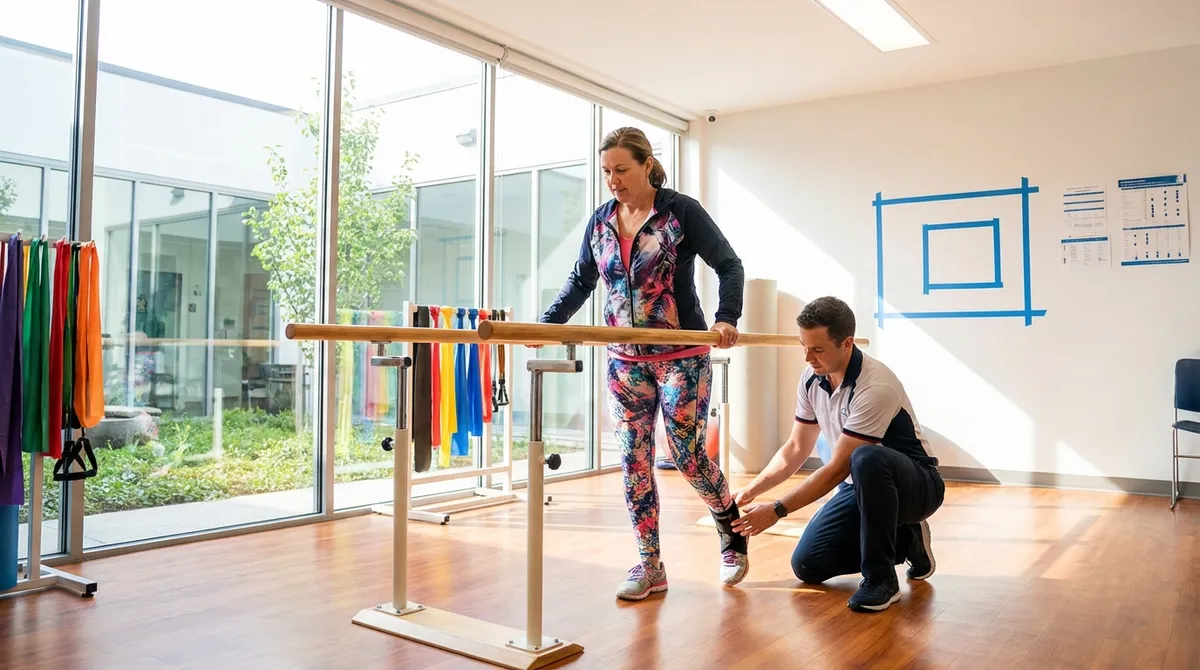
This article is here to support you with practical, compassionate guidance and five wellness tips that can help your therapy feel more manageable, more meaningful, and more like your own comeback plan.
Understanding Physical Therapy as a Partnership
Physical therapy isn’t something that’s “done to you.” It’s a partnership between you, your therapist, and your body. Your therapist brings clinical expertise—knowledge of anatomy, movement, healing timelines, and pain science. You bring lived experience—your history, your pain levels, your fears, your goals, and the deep understanding of what a “good day” feels like for you.
When you think of PT as a team effort instead of a pass/fail test, the pressure eases. You don’t have to be perfect; you just need to be honest and consistent. If an exercise hurts in a sharp or worrying way, you’re not “complaining”—you’re providing essential information. If something feels encouraging or helpful, that’s important data too. Your feedback allows your therapist to adjust your plan so it truly fits your body, not just a textbook.
Healing also rarely moves in a straight upward line. Some days you’ll feel stronger and more mobile; other days may feel like a step backward. This doesn’t mean the therapy isn’t working—it means your body is processing change. The goal isn’t instant transformation. It’s gradual, sustainable improvements that add up over time to more ease, more function, and more confidence in your own body.
Tip 1: Turn Your Goals Into Stories, Not Numbers
You might start PT with clear medical goals: increase range of motion, reduce pain, improve balance. Those are important, but they’re only part of the picture. What really keeps people going—especially on hard days—are meaningful, personal goals that sound like a story instead of a statistic.
Instead of only thinking, “I want to bend my knee to 120 degrees,” try framing goals like:
- “I want to walk my dog around the block without needing to stop.”
- “I want to stand long enough to cook my favorite meal.”
- “I want to lift my grandchild safely and comfortably.”
- “I want to feel okay sitting at my desk through a workday.”
These story-based goals connect the exercises to real life, which makes them far more motivating. Your PT can help you break big goals into realistic steps, so they feel possible instead of overwhelming. When you notice you can climb one more stair, sit a bit longer, or sleep with less discomfort, you’re not just “meeting a metric”—you’re reclaiming pieces of your life.
If you can, write these life-based goals somewhere visible: a note on your phone, a sticky note by your bedside, or a simple sentence in a journal. On days when your energy dips, reading them can remind you why you’re doing this hard and important work.
Tip 2: Build a Gentle Recovery Routine Around Your Everyday Life
One of the biggest challenges with physical therapy is fitting home exercises into a busy or already-exhausting day. Rather than relying on willpower alone, it helps to “anchor” your exercises to routines you already have. That way, PT becomes part of your day, not a separate, overwhelming task.
You might try:
- Doing a short stretch routine right after brushing your teeth.
- Practicing balance exercises while waiting for your coffee to brew.
- Doing seated or gentle mobility exercises during a TV show (between episodes or during breaks).
- Keeping a resistance band or small exercise tool next to your favorite chair to cue you to move.
The idea is consistency, not intensity. A few minutes, regularly, can be more powerful than a single, intense burst once a week. If your therapist has prescribed certain exercises, ask them which ones are the highest priority so you can focus on those when time or energy is low.
Also, be kind to yourself when you miss a day. Skipping a session doesn’t erase your progress—it just means you resume as soon as you reasonably can. Healing is not an attendance contest; it’s an ongoing relationship with your body, and flexibility is part of that.
Tip 3: Practice “Curious Listening” to Your Pain and Fatigue
Pain can be frightening, frustrating, and exhausting, especially if you’ve been dealing with it for a long time. In PT, pain and discomfort are often part of the process—but they’re not all the same, and you don’t have to just “tough it out” without understanding what’s happening.
A helpful approach is to practice “curious listening” instead of immediate fear or judgment. When pain shows up during or after exercises, you and your therapist can work together to explore:
- Is this a stretching/working sensation or a sharp, alarming pain?
- Does it settle down after you rest, or does it continue to build?
- Is it in the joint, the muscle, or a different area than usual?
- Did you do more today than your body is used to?
This kind of exploration helps distinguish between “expected” soreness as tissues strengthen and mobilize, and warning signs that something needs to be modified. Keeping a simple log of how you feel before and after exercises can be incredibly helpful. It doesn’t need to be fancy—just a few words like “mild ache in right knee after squats, eased in 20 minutes.”
Over time, this sort of listening builds body awareness and reduces fear. You’re no longer in the dark; you’re participating in understanding what your body is saying. And when you share these observations with your therapist, they can fine-tune your plan, adjust loads or positions, and help keep you safe while still progressing.
Tip 4: Support Your Healing with Rest, Hydration, and Small Movement Breaks
Physical therapy doesn’t exist in a vacuum—what you do between sessions matters. The good news is that you don’t need a perfect lifestyle to support healing. Small, doable choices can make a real difference to your comfort and recovery.
Some gentle ways to support your body:
- Rest that actually restores you: Healing tissues need recovery time. Aim for a consistent sleep schedule as much as you can. If sleep is challenging, even a quiet, screen-free wind-down routine before bed can help signal your body that it’s time to rest.
- Hydration as a daily kindness: Muscles, joints, and connective tissues rely on adequate fluid. Keeping a water bottle nearby and sipping regularly supports joint lubrication and can reduce feelings of stiffness.
- Movement breaks instead of marathon sessions: If your day involves a lot of sitting or standing, try short, frequent movement breaks—simple ankle pumps, shoulder rolls, or walking to a different room. These “mini-movements” keep blood flowing and can help prevent your body from locking into one painful position.
- Paying attention to posture without obsessing: There’s no single “perfect” posture, but variety of positions matters. If your PT has given you tips on ergonomics or body mechanics, think of them as tools, not rules—use them when they help you feel better, not as one more thing to criticize yourself about.
You don’t have to overhaul your entire lifestyle. Even one or two small supportive habits, repeated over time, can amplify the benefits of your physical therapy sessions.
Tip 5: Celebrate Micro-Wins and Redefine What Progress Looks Like
In a world that loves “before and after” transformations, it’s easy to overlook the small milestones that truly define healing. In physical therapy, progress is often measured in inches, degrees, or seconds—but your emotional experience matters just as much.
Micro-wins might look like:
- Needing fewer breaks to finish an exercise set.
- Getting out of a chair with a little less effort.
- Feeling slightly more confident walking outside.
- Noticing that a movement that once scared you now feels more possible.
- Waking up with pain that’s a bit less intense or resolves more quickly.
These changes can be subtle at first, but they’re powerful. They’re signs that your nervous system, muscles, and joints are adapting. Your body is learning new patterns, and your confidence is growing right alongside your physical capacity.
It can help to:
- Write down one small win after each PT session or home exercise day.
- Share these wins with your therapist so you can celebrate together.
- Remind yourself that feeling discouraged occasionally doesn’t mean you’re failing; it just means this is hard—and you’re doing it anyway.
Progress in physical therapy is rarely about perfection. It’s about showing up, adjusting when needed, listening to your body, and honoring improvements—no matter how modest they may seem. Those micro-wins are the building blocks of a more comfortable, capable future self.
Conclusion
Starting or continuing physical therapy is an act of courage. You’re facing discomfort, uncertainty, and effort—not because you “have to be stronger,” but because you deserve a life with more ease, function, and possibility.
By partnering with your therapist, setting meaningful goals, weaving exercises into your daily life, listening curiously to your body, supporting your recovery with simple habits, and honoring every small win, you create a healing path that’s both practical and deeply personal.
You don’t have to do everything perfectly. You only have to keep taking the next kind step that’s available to you today. Your body is not your enemy—it’s your teammate in this process. And every thoughtful repetition, every movement break, every moment of rest is part of your comeback story.
Sources
- American Physical Therapy Association – What Is Physical Therapy? - Overview of physical therapy, what PTs do, and how treatment is structured
- Mayo Clinic – Physical Therapy and Rehabilitation - Explains the goals, benefits, and expectations of physical therapy and rehab
- Cleveland Clinic – How Physical Therapy Can Help You Recover - Discusses recovery, pain management, and common reasons people attend PT
- National Institutes of Health (NIH) – Pain Education Resources - Provides evidence-based information on understanding and managing pain
- Harvard Health Publishing – The Importance of Movement and Activity - Explores how regular movement and reduced sitting support overall physical health