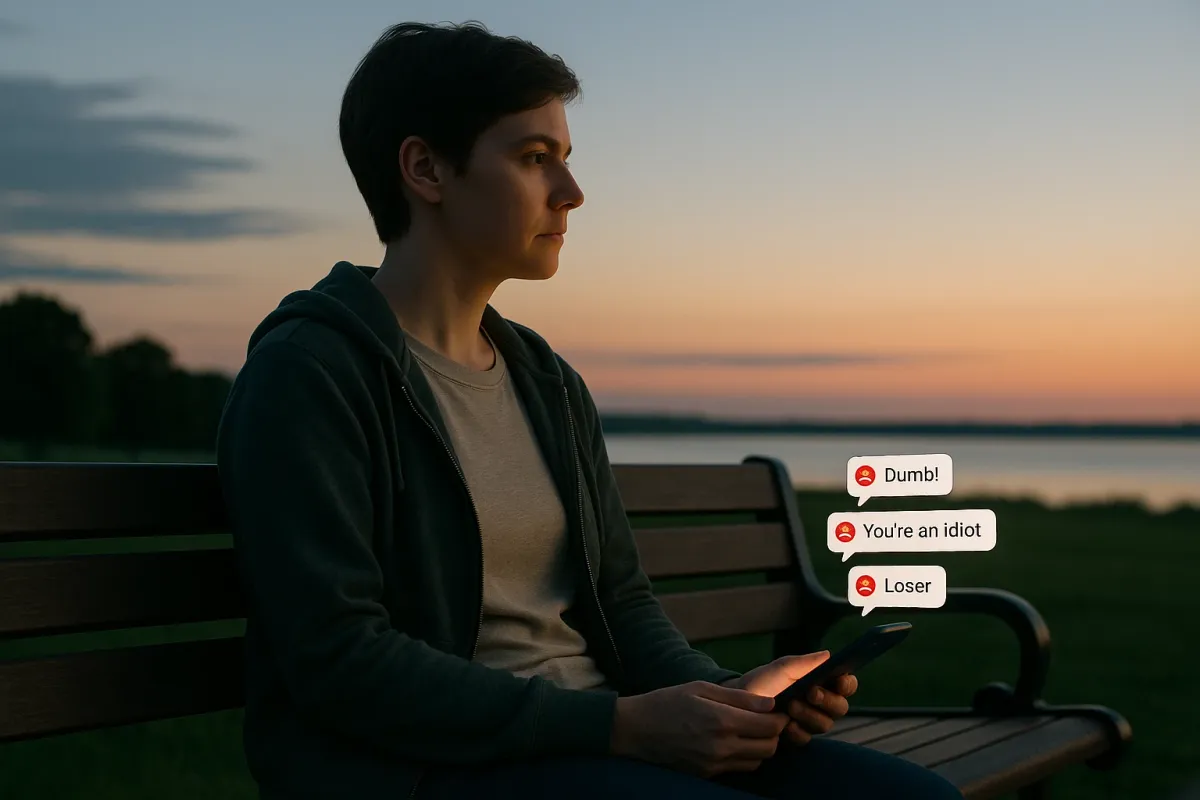
Whether you’re recovering from injury, illness, burnout, or emotional wounds, being judged—online or offline—can feel like salt in an open cut. But your recovery does not belong to the comment section. It belongs to you. And you’re allowed to heal at your own pace, in your own way, even when the world is loudly convinced it knows better.
Below are encouraging, practical ways to protect your healing, rebuild your confidence, and keep moving forward—especially when outside voices get loud.
Reclaim Your Story From The “Comment Section” In Your Head
Seeing strangers dissect a homeschool setup on social media—questioning parenting, values, and choices—highlights how quickly a personal moment can become public property. The same thing can happen inside your mind: old criticism, hurtful words, or past failures replay like a never‑ending thread of harsh comments.
Start by noticing the “internal commenters” you’ve absorbed. Whose voice is it when you think, “I’m failing,” “I’m behind,” or “Everyone’s doing better than me”? A parent? A teacher? An ex? A boss? A random person on the internet? Gently separate those voices from your own. You’re allowed to say, “That’s not my story anymore.” One simple exercise: write down one painful sentence your mind throws at you, then rewrite it as a supportive friend would. For example, “I’m so behind in my recovery” becomes, “I’m moving forward in real life, not in a race. Every step still counts.” The more often you reclaim the narrative, the quieter the inner critics become.
Set Boundaries With Social Media While You Heal
The backlash to the viral homeschool clip is a clear reminder: the online world is not always a safe space for tender seasons. If you’re navigating recovery—physical, emotional, or mental—constant exposure to hot takes, highlight reels, and harsh opinions can drain your strength before the day even starts.
Give yourself permission to create a “healing bubble” around your digital life. That could mean muting certain accounts, limiting time on platforms where you feel triggered, or uninstalling apps temporarily while you focus on your body and mind. You’re not “out of touch” for doing this—you’re protecting your nervous system. Replace some of that scroll time with something nourishing: a short walk, a gentle stretch, journaling, a chapter of a comforting book, or a check‑in with a supportive friend. Your recovery deserves quiet spaces where you’re not constantly comparing, defending, or explaining yourself.
Let Imperfect Effort Be Enough For Today
One reason that homeschool video sparked such intense reactions is because people on the internet often expect perfection—from parents, from teachers, from strangers. You might be turning that same unrealistic expectation onto yourself: perfect rehab routine, perfect diet, perfect sleep, perfect mindset every day. That pressure can be paralyzing.
Recovery is messy. Some days you’ll feel strong and hopeful; other days, standing up, showering, or doing your exercises for five minutes might be your personal victory. Let that be enough. Try using “minimums” instead of “all or nothing”:
- Instead of “I must walk 30 minutes,” try “I will walk to the end of the street.”
- Instead of “I must cook a perfect healthy meal,” try “I will add one nourishing thing to what I’m already eating.”
- Instead of “I must stay positive,” try “I will notice one thing that didn’t go wrong today.”
Tiny, imperfect efforts repeated over time are how real healing happens. You’re building consistency, not performing for a scoreboard.
Build A Quiet Support Team—Not A Public Audience
In the homeschool discussion, millions of strangers weighed in, but very few of them actually knew the child, the family, or their story. That’s the limitation of the crowd: it’s loud, but it’s not always wise or kind. In your own recovery, it’s tempting to look for validation from the broadest audience possible—posting every step, seeking reassurance, or hoping for applause. But what you truly need is not a crowd; it’s a circle.
Think of three types of people who can be in your “healing team”:
- One person who listens without fixing (the friend you can text, “Today was hard,” and they simply say, “I’m here.”)
- One person who brings practical support (a ride to appointments, a meal, helping with kids or errands).
- One person with expertise (a therapist, coach, physical therapist, or doctor you feel safe asking questions).
You don’t need dozens of people—just a few who see the real you, not the edited “version” of you. Let them in. Ask for help in specific, clear ways. Recovery is not meant to be a solo project.
Turn Criticism Into Compassion—Starting With Yourself
The reactions to that homeschooling video were full of assumptions: about the child, the mom, the environment, even their intentions. We do this to ourselves, too. We assume: “If I were stronger, I’d be healed by now,” “If I really wanted it, I wouldn’t struggle,” or “Everyone else would handle this better.” These internal judgments slow healing more than any diagnosis.
Try flipping the script from criticism to curiosity and compassion:
- Instead of “Why am I still like this?” ask, “What is my body or heart asking for right now?”
- Instead of “I should be over this,” ask, “What helped me even a little last time I felt this way?”
- Instead of “I’m weak,” remind yourself, “I’m still here. That means I’m resilient.”
Self‑compassion isn’t letting yourself off the hook; it’s giving yourself the conditions you’d give a loved one to grow, rest, and rebuild. When you choose a gentler inner voice, you’re not being “soft”—you’re creating the mental environment your recovery needs to thrive.
Conclusion
The viral homeschool clip—and the intense backlash around it—is a snapshot of something many of us face: being judged while we’re trying our best. Whether your recovery is visible (like physical rehab) or invisible (like healing from trauma, grief, or burnout), your path will sometimes be misunderstood, criticized, or questioned.
You don’t owe the world a perfect explanation to deserve healing. You owe yourself protection, patience, and small daily choices that move you toward wholeness. Step by step—quietly, imperfectly, bravely—you are allowed to take up space in this world as a work in progress.
Your journey is not a public debate. It’s a deeply personal transformation. And even if the crowd doesn’t see it, your effort today matters more than you know.