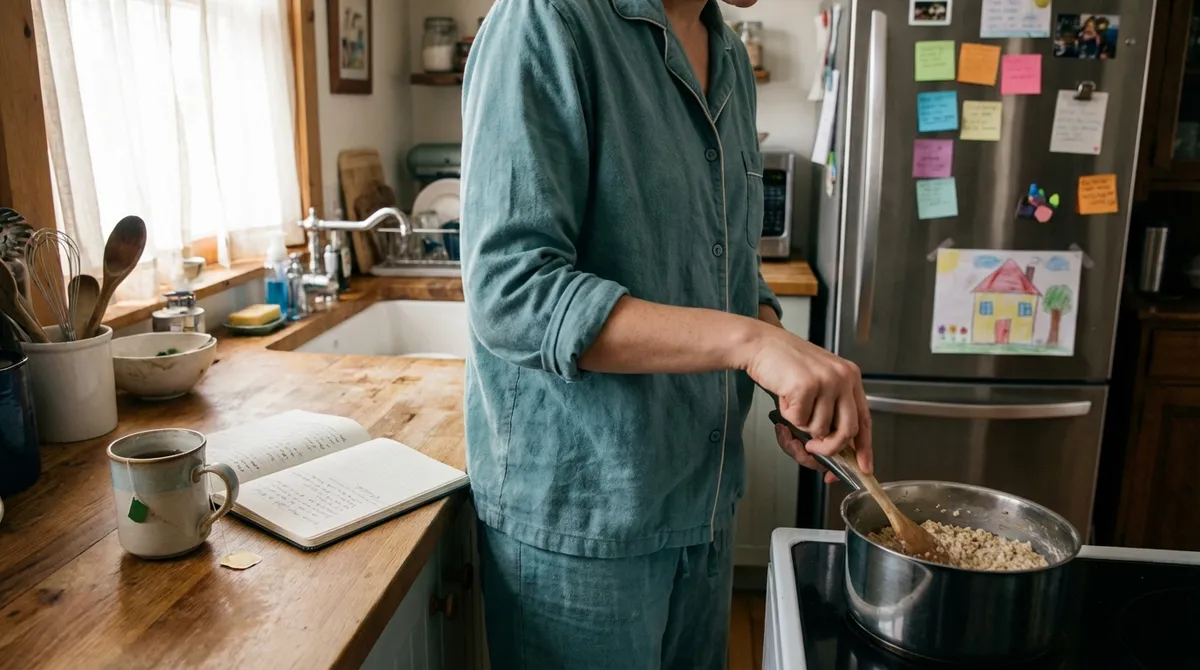
You don’t need a perfect routine or endless motivation to heal. You just need small, repeatable actions that fit your actual life—and a little self-kindness when things don’t go as planned.
This guide offers five realistic wellness tips you can weave into your recovery, no matter where you’re starting. Use what fits, leave what doesn’t, and remember: progress is still progress, even when it’s slow.
Tip 1: Create a “Good Enough” Plan for Tough Days
Many recovery plans fall apart not because they’re bad, but because they’re built for our best days. Real life is messy—pain flares up, energy crashes, work runs late, kids need help, and motivation disappears.
Instead of aiming for a perfect plan, try building a “good enough” version for hard days.
- Decide your bare minimum movement: maybe 3 gentle stretches or a 5‑minute walk down the hall.
- Choose a fallback meal or snack that’s simple and nourishing (like frozen veggies, pre-cooked grains, or yogurt with fruit).
- Set a realistic sleep boundary, like turning off screens 15–30 minutes earlier, even if you can’t manage a full wind‑down routine.
- Pick one non-negotiable self-check, such as asking, “What do I need most right now—rest, movement, or support?”
This “good enough” plan becomes your safety net. On the days when your usual routine feels impossible, you’re not starting from zero—you’re still showing up for yourself in a way that respects your limits.
Tip 2: Listen to Your Body Without Letting Fear Run the Show
During recovery, every sensation can feel like a warning sign. A twinge might make you wonder, “Is this normal?” or “Am I making things worse?” It’s understandable—your body has been through a lot.
There’s a difference, though, between listening to your body and letting fear make every decision.
Consider this approach:
- Notice sensations with curiosity instead of judgment: “I feel tightness in my back,” instead of “My back is failing me again.”
- Rate your discomfort on a simple scale (0–10) and track how it changes with different activities. Over time, this can help you and your care team see patterns.
- Learn what your providers consider a “yellow light” (slow down, modify, monitor) versus a “red light” (stop and seek help).
- When fear pops up, pair it with a grounding thought such as, “I can move gently and still be safe,” or “I’ve handled difficult days before.”
Listening to your body this way helps you respect your limits without freezing in place. You’re not ignoring pain—but you’re also not letting it write the whole story.
Tip 3: Turn Everyday Moments Into Recovery Checkpoints
You don’t need extra hours in the day to support your healing. Often, the most sustainable changes come from attaching new habits to things you already do.
Think of your day as a series of “checkpoints” where you can add small supportive actions:
- Morning wake-up: Before you get out of bed, take 3 slow breaths, noticing where your body feels supported by the mattress. This can calm your nervous system and reduce tension.
- Meals: Use the first few bites to check in: “How hungry am I? How does my body feel right now?” This can help you eat in a way that supports energy rather than spikes and crashes.
- Work or chores breaks: Each time you stand or sit, do a 30–60 second posture reset, shoulder roll, or gentle twist (if it’s safe for your condition).
- Evening wind-down: Ask, “What’s one thing I did today that supported my recovery?” It could be as simple as drinking water, taking a break when you needed it, or saying no to one extra obligation.
These micro‑habits may seem too small to matter—but they add up. Recovery isn’t just built in big milestones; it grows from dozens of tiny decisions your future self is quietly grateful for.
Tip 4: Let Support In—Even in Small, Imperfect Ways
You don’t have to carry your recovery alone. Still, asking for help can feel uncomfortable—especially if you’re used to being the one other people rely on.
Support doesn’t have to be dramatic or all-or-nothing. It can sound like:
- “Could you help with the heavier tasks this week? My body needs a bit more care.”
- “I have a follow‑up tomorrow; can you check in afterward and help me process what the doctor said?”
- “I’m tempted to overdo it today. Can you remind me it’s okay to stop when I’m tired?”
- “I can’t make it out, but I’d love a quick call or text. I’m feeling a bit isolated.”
You can also consider:
- Joining a support group (online or local) related to your condition
- Asking your provider about behavioral health, counseling, or pain psychology resources if emotions feel heavy
- Staying in touch with your healthcare team about flare-ups or changes, rather than waiting until things feel urgent
Letting people in doesn’t make you weak or needy; it makes your recovery more sustainable. Community doesn’t erase the hard parts, but it can make them more bearable.
Tip 5: Redefine Progress So You Can Actually See It
Recovery rarely moves in a straight, predictable line. There are ups, downs, and plateaus that can make you wonder if anything is working. But often, progress is happening in ways that don’t show up in a before-and-after photo or a number on a chart.
Start noticing different types of wins, such as:
- Endurance wins: “I was able to stand 5 minutes longer than last month.”
- Skill wins: “I remembered to pace myself instead of pushing through all at once.”
- Brain wins: “I caught a negative thought and replaced it with something more supportive.”
- Boundary wins: “I turned down something my body wasn’t ready for, even though I felt guilty.”
- Resilience wins: “I had a setback, but I recovered my routine more quickly than before.”
You might track these in a journal, a notes app, or a simple weekly check-in with yourself. When you write them down, you create a record that says, “I am changing, even when it’s hard to feel it.”
Recovery isn’t about becoming your “old self” again. It’s about building a new version of your life—and your identity—that includes what you’ve learned from this experience.
Conclusion
You’re not behind. You’re not failing. You’re moving through something that would challenge anyone, and you’re still here, still trying, still showing up in the ways you can. That matters.
Recovering isn’t about doing everything right; it’s about doing the next kind thing for your body and mind, then the next, and then the next. Some days that will look like strength and momentum. Other days it will look like rest, boundaries, and simply not giving up on yourself.
As you move forward, keep asking: “What kind of recovery feels livable for me—today, in this season?” Then build from there, one small, honest step at a time. You deserve a healing process that honors your real life, not an imaginary perfect version of it.
Sources
- National Institutes of Health – Chronic Pain and Recovery - Overview of how pain works in the body and why pacing and gentle movement can help
- Centers for Disease Control and Prevention – Coping with Chronic Illness - Guidance on emotional and practical strategies for living with ongoing health conditions
- American Psychological Association – The Road to Resilience - Explains how resilience develops and why small, consistent actions and support systems matter in recovery
- Mayo Clinic – Chronic Pain: Medication Decisions - Discusses pain management options and the importance of working with your care team
- Cleveland Clinic – Pacing Yourself with Chronic Pain - Describes pacing, activity planning, and how to reduce flare-ups by respecting your limits