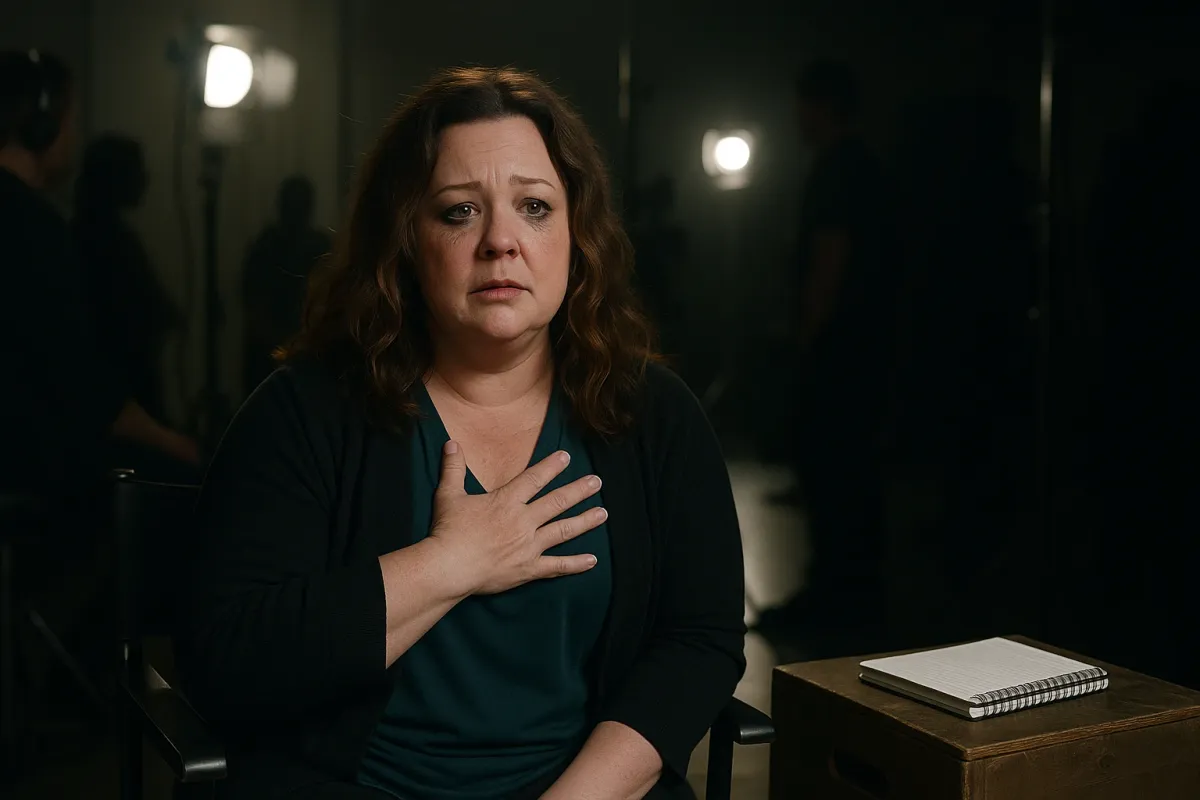
If you’re on any kind of recovery or wellness journey—whether it’s healing from an injury, rebuilding your mental health, managing a chronic condition, or redefining your relationship with food and movement—you might feel this pressure too. The pressure to “transform,” to “bounce back,” to have a dramatic before-and-after that looks good on Instagram or TikTok.
But behind every headline—Melissa McCarthy’s, yours, mine—there’s a quiet, daily story of recovery that doesn’t fit into a single viral moment.
This is your reminder: you don’t owe anyone a dramatic reveal. You don’t have to explain your body, your pace, your choices, or your path. You’re allowed to heal in real time, not on a deadline.
Below are five grounded, compassionate recovery tips inspired by the kind of scrutiny we’re seeing around Melissa McCarthy’s transformation—and designed to help you protect your peace while you rebuild your health.
1. Define Your Own Version of “Success,” Not Social Media’s
When a celebrity like Melissa McCarthy trends for weight loss, the unspoken message is: success looks like shrinking your body. The comments, the speculation about injections, the side-by-side photos—everything gets reduced to numbers and appearance.
For your recovery, that definition is far too small.
Your version of success might be:
- Being able to walk around the block without pain.
- Getting through a workday without a panic attack.
- Sleeping through the night for the first time in months.
- Cooking yourself a real meal instead of skipping or snacking.
- Saying “no” to something that drains you.
- Specific (“I can lift my arm to shoulder height” vs. “get stronger”).
- Functional (how it changes your daily life).
- Feeling-based (calmer, more energetic, more stable).
Take a quiet moment and write down what “better” actually means to you. Try to keep it:
Return to this list when comparison creeps in. Headlines and comment sections may obsess over appearance, but your body is not a billboard. It’s your home.
2. Protect Your Recovery From Other People’s Opinions
Notice what happened the moment Melissa McCarthy’s new look hit SNL: everyone had a theory. Some praised her. Some criticized. Some questioned the “how” and “why” as if they were owed an explanation. This is what public recovery often looks like—loud, opinionated, and not always kind.
You may not be a celebrity, but you might still feel “watched”:
- Family members making comments about your body or plate.
- Friends asking, “Are you better yet?”
- Coworkers noticing changes in your schedule or energy.
- Social media friends reacting to every small update.
- Set simple boundaries.
- “I’m focusing on feeling better, not the scale.”
- “Thanks for caring, but I’m not discussing details right now.”
- Limit body talk. Steer conversations away from weight, diets, or appearance when you can.
- Curate your feed. Mute or unfollow accounts that trigger comparison or shame. Fill your timeline with recovery-positive voices and evidence-based health info.
- Have one safe person. Choose a friend, partner, therapist, or support group where you can be unfiltered and honest.
Here’s how to gently guard your healing:
Remember: your health is not a group project. You’re allowed to choose who gets to know what.
3. Focus on Habits You Can Repeat, Not Results You Can Post
Headlines highlight the “95 pounds” and the “after,” not the months (or years) of boring, quiet choices behind the scenes. That can make it feel like recovery should be fast, dramatic, and linear. Real-life healing is rarely any of those things.
Instead of chasing a big reveal, build small routines you can actually sustain:
- Anchor habits to things you already do.
- After brushing your teeth → 2 minutes of gentle stretching.
- Before checking your phone in the morning → 5 slow breaths.
- After lunch → a 5–10 minute walk or movement break.
- Think in “minimums,” not maximums.
- Minimum 1 glass of water in the morning.
- Minimum 5 minutes of movement, even if that’s all you have.
- Minimum 10 minutes before bed without screens.
- Track effort, not just outcomes. Mark a calendar for every day you showed up for yourself in any small way. A “streak” of effort matters more than the illusion of perfection.
What you repeat quietly will carry you much further than what you post loudly.
4. Make Peace With Pacing: Healing Is Allowed To Be Slow
The way Melissa McCarthy’s recent appearance is being talked about—“jaw-dropping,” “stunning,” “shocking”—sends a message that speed and drama equal success. But your body is not a breaking news story. It’s a living system that heals best when it’s not rushed.
Pacing is especially important if you’re:
- Recovering from surgery, injury, or burnout.
- Managing long COVID or another chronic illness.
- Healing your relationship with food or exercise.
- Rebuilding mental health after a major life event.
- Using the “10% rule.” When increasing exercise, workload, or exposure to stressors, aim to increase in tiny increments, not overnight leaps.
- Honoring flare days. A setback doesn’t erase progress; it’s information. Adjust your plan, not your worth.
- Scheduling rest like an appointment. Put recovery time in your calendar—stretching, therapy, early nights, or simply doing nothing—and treat it as non-negotiable.
- Expecting plateaus. Normal healing includes stretches where nothing seems to change. Plateaus are often where your body is consolidating gains quietly.
Support yourself by:
Slow is not failing. Slow is often where the deepest, most stable recovery happens.
5. Build Identity Beyond Your “Before and After”
Media often reduces people to their body stories: “the actress who lost 95 pounds,” “the anchor who went viral,” “the person who transformed.” But for long-term recovery, you need an identity that’s bigger than your symptoms—or your transformation.
Ask yourself:
- Who am I when I’m not tracking my pain, my steps, my weight, or my productivity?
- What lights me up that has nothing to do with health metrics?
- What kind of person am I becoming as I move through this healing process?
- Collect non-appearance wins.
- “I listened to my body and stopped when I was tired.”
- “I advocated for myself at the doctor’s office.”
- “I handled a tough day without numbing out in old ways.”
- Reclaim old joys—or try new ones. Reading, crafting, gardening, music, games, conversations, learning a language, volunteering… all of these nourish your sense of self.
- Use identity-based language.
- “I’m someone who takes my health seriously.”
- “I’m learning to be kind to my body.”
- “I’m building a life that feels sustainable.”
To reinforce that fuller identity:
Your body may change. Your habits may change. But your worth is not up for debate—not online, not in gossip, not under any headline.
Conclusion
Melissa McCarthy’s recent SNL appearance and the flood of reactions around her weight loss are a snapshot of how our culture talks about bodies and health right now: loudly, quickly, and often without much compassion or context.
You don’t have to heal that way.
You’re allowed to:
- Set your own definition of recovery.
- Guard your process from outside noise.
- Choose gentle, repeatable habits.
- Heal at a pace that respects your body.
- Become someone bigger than any “before and after.”
If today all you did was keep going—rested when you were exhausted, took your meds, showed up to therapy, moved your body a little, or simply chose not to give up—that counts.
Your recovery doesn’t have to be jaw-dropping to be life-changing. It just has to be yours.