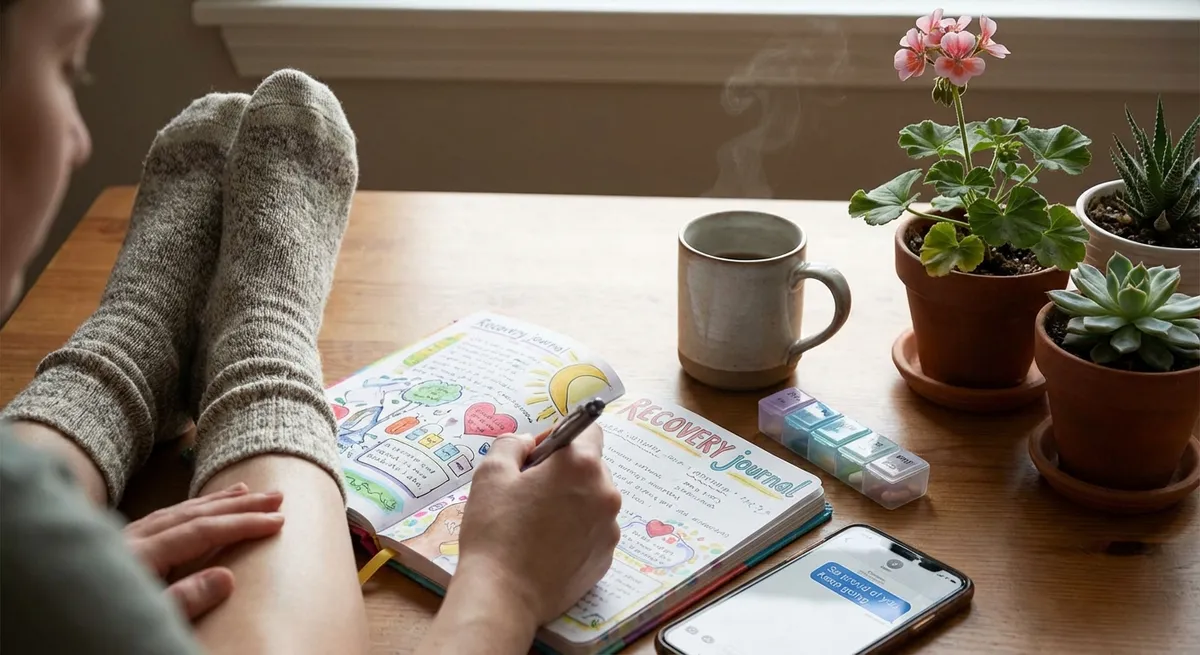
This isn’t about becoming the “old you” again. It’s about supporting the person you are today, with the body, mind, and energy you have right now. Below are five grounded, realistic wellness tips to help you move through recovery at your own pace—without burning out or giving up on yourself.
Redefine Progress So It Actually Fits Your Life
Recovery can feel defeating when you measure yourself against who you used to be, or against someone else’s timeline. The truth is: your body, history, and circumstances are uniquely yours. Your version of “better” might not look like anyone else’s—and that’s okay.
Try shifting your idea of progress from big milestones to small, observable changes. Progress can look like needing slightly less rest after a task, feeling more hopeful than last month, asking for help sooner, or showing up to one more appointment than you wanted to skip. These quiet wins count.
It can help to keep a simple “progress log”—one sentence a day about something that went a little better than before, or something you handled differently. On hard days, looking back reminds you that your effort is building something, even when it doesn’t feel dramatic or fast.
When you redefine progress to include the subtle, steady shifts, you give yourself room to heal without the pressure of constant, visible improvement.
Build a Recovery Rhythm Instead of Rigid Routines
Strict routines can be overwhelming when your energy, pain levels, or mood change from day to day. Instead of forcing yourself into a rigid schedule, think in terms of a “recovery rhythm”—a flexible structure that can bend with how you’re actually feeling.
A recovery rhythm might include a few anchor points you return to most days: a wake-up window instead of a fixed time, a movement break suited to your capacity, a regular meal rhythm, and a wind-down practice before bed. The details can change each day, but the anchors stay familiar.
You might create “tiers” of activity based on your energy:
- Low-energy version: Gentle stretching in bed, a short breathing exercise, a simple snack or meal.
- Medium-energy version: A short walk, basic strengthening exercises, prepping a balanced meal.
- High-energy version: Longer movement, errands, or tasks that require more focus.
On any given day, you choose the tier that feels doable. This way, you stay connected to your goals without demanding the same output from yourself every single day.
A rhythm respects both your commitment to recovery and your humanity. It allows you to keep showing up—just in ways that fit your real life, not an idealized one.
Let Rest Be Part of the Plan, Not Proof of Weakness
Many people in recovery struggle with guilt around rest. You might worry that stopping means you’re losing ground, or that you “should” be able to push through. But rest is not what stands between you and recovery—unchecked exhaustion is.
Your body repairs tissue, processes emotions, and consolidates new skills and movements when you rest. That means every intentional pause is actually active work your body is doing behind the scenes. Rest isn’t a break from recovery; it’s a crucial part of it.
Try intentionally scheduling rest, just like you would an exercise session, therapy appointment, or work task. When rest is written into your day, it feels less like a failure and more like a responsibility you’re honoring.
If you struggle to rest without self-criticism, experiment with “protective language.” Instead of telling yourself, “I’m being lazy,” try: “I’m giving my body what it needs so tomorrow has a chance to be lighter,” or “This rest is fuel for my next step.”
Remember: pushing yourself past your real limits doesn’t prove you’re motivated. Listening to your limits—and responding kindly—is what helps you heal sustainably.
Create a Support Circle That Matches Your Season
You don’t have to explain every detail of your experience to everyone in your life—but it helps to have a small circle of people who “get it” enough to support you well. This might include family, friends, a partner, a therapist, a physical therapist, or others on a similar journey.
Think about the different kinds of support you need right now:
- Practical support: Rides to appointments, help with meals, childcare, or errands.
- Emotional support: Someone who can listen without fixing, validate your feelings, and remind you of your progress when you can’t see it.
- Professional support: Guidance from healthcare providers who respect your goals and listen to your concerns.
- Peer support: People who have lived through something similar and can say, “Me too—here’s what helped me.”
It’s okay if the people you wish were most supportive aren’t able to show up in the way you need. You’re allowed to look for support outside your usual circles—through community groups, online forums, or local resources.
Being supported doesn’t mean you’re not strong. It means you’re wise enough to know that healing is heavy work and it’s allowed to be shared.
Celebrate the Person You’re Becoming, Not Just the Symptoms You’re Losing
Recovery is often framed as “getting rid of” something—less pain, fewer symptoms, lower anxiety, more strength. While these outcomes matter, they’re not the whole story. Along the way, you’re also becoming someone more aware, more resilient, and more connected to what truly matters to you.
Take a moment to notice what recovery is teaching you: maybe patience with your body, deeper self-respect, stronger boundaries, or greater empathy for others who are struggling. These aren’t consolation prizes; they are powerful changes in who you are and how you move through the world.
You can honor these shifts by:
- Journaling about what you’re learning in this season
- Noticing ways you handle challenges differently than before
- Allowing yourself to feel proud of inner changes, even if outer progress is slow
When you celebrate the person you’re becoming—not just the pain you’re leaving behind—your recovery becomes more than a finish line. It becomes a relationship with yourself that you’ll carry long after this chapter ends.
Conclusion
You are not behind. You are not broken. You are living through something hard and still looking for ways to care for yourself—and that is evidence of your strength, not your weakness.
Recovery doesn’t demand perfection. It asks for presence: to keep showing up for your body as it is today, to honor your limits without shame, to reach for support, and to notice the quiet ways you are growing.
Your path won’t look like anyone else’s, and it doesn’t need to. One compassionate choice at a time is enough. You are allowed to heal at your pace—and every small, honest effort you make is moving you forward, even on the days it doesn’t feel like it.
Sources
- National Institutes of Health – Understanding Recovery and Resilience - Discusses coping, resilience, and emotional recovery after difficult experiences
- Mayo Clinic – Chronic Pain: Self-Care and Coping - Covers pacing, rest, and practical strategies for managing ongoing pain during recovery
- Cleveland Clinic – Rehabilitation and Therapy Overview - Explains the role of rehabilitation, goal-setting, and gradual progress in physical recovery
- American Psychological Association – The Road to Resilience - Explores how people adapt to adversity and the importance of support and flexible thinking in recovery
- Centers for Disease Control and Prevention – Self-Management Education - Highlights the value of self-management skills and support for people living with ongoing health conditions