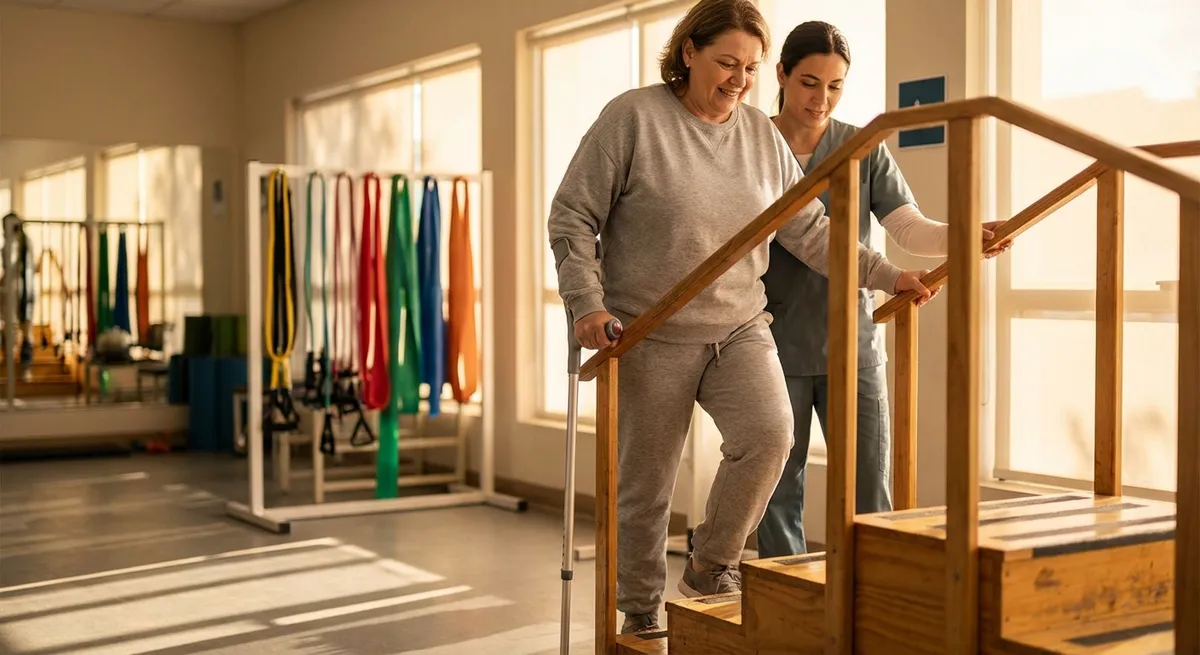
Why Physical Therapy Is More Than Just Exercises
Physical therapy is often misunderstood as a set of boring movements you’re told to repeat at home, but in reality, it’s closer to having a coach, a translator, and a strategist for your body all in one.
A physical therapist can help you understand what’s happening inside your body in plain language, so pain and symptoms feel less mysterious and scary. They don’t just look at the painful area; they also look at how you move, sit, sleep, work, and manage your day, because all of that shapes how you feel.
PT is a space where you’re encouraged to ask, “Is this normal?” and “What can I safely do?” without judgment. It also gives you tools you can take beyond the clinic: ways to lift, stretch, rest, and pace yourself so that daily life becomes more manageable.
Most importantly, good physical therapy is collaborative. You’re not a passive patient being “fixed”—you’re a partner in your own recovery. That shift alone can be deeply empowering when everything else feels out of your control.
Tip 1: Treat Pain Signals as Information, Not a Verdict
When pain shows up—sharp, dull, nagging, or unpredictable—it’s easy to slide into all-or-nothing thinking: “My body is broken,” “This will never get better,” or “I can’t trust myself anymore.” Physical therapy invites a different approach: treating pain like information rather than a final verdict.
Your therapist can help you sort out the difference between “hurt” and “harm.” Sometimes, mild discomfort during rehab isn’t a sign of damage; it’s your body adapting to new demands. At other times, sharp or escalating pain might be a warning to adjust what you’re doing. Learning to tell the difference can lower fear and help you move more confidently.
Try noticing: When does the pain show up? What makes it a little better or a little worse? How long does it last? Bringing these observations to your PT turns your experience into useful data instead of something you just endure.
You’re not overreacting for noticing your pain. You’re also not doomed because it’s still there. You’re learning a new language your body speaks—and that takes time.
Tip 2: Build a “Movement Baseline” Instead of Chasing Perfection
Many people walk into PT hoping to “get back to normal” immediately, only to feel discouraged when progress is slower than expected. A more compassionate and sustainable approach: focus on building a realistic movement baseline first.
Your movement baseline is the amount and type of activity you can usually handle on most days without a major flare-up. That might be a 5-minute walk, standing long enough to cook a simple meal, or doing your home exercise program once daily. It won’t look the same as anyone else’s, and that’s okay.
Work with your physical therapist to:
- Identify your current baseline (what you can do consistently, not just on a “good day”).
- Add small, structured increases (like an extra 1–2 minutes of walking or one more repetition).
- Notice how your body responds over 24–48 hours, not just in the moment.
This method—often called graded activity or pacing—helps your body gently expand its capacity without constantly crashing. Instead of swinging between “I did nothing” and “I overdid it,” you begin to find a steadier middle ground.
Progress may look like “last week this left me exhausted, this week it’s just tiring.” That counts. Your baseline is not a limitation; it’s your launchpad.
Tip 3: Create Tiny, Repeatable Routines That Don’t Rely on Willpower
Motivation fluctuates, especially when you’re tired, discouraged, or in pain. Relying on “I’ll do it when I feel like it” usually means the exercises don’t happen at all. Instead, think in terms of tiny, repeatable routines that fit your real life.
Start with one or two PT exercises and attach them to something you already do every day:
- Do your stretch while the coffee brews.
- Do 5–10 gentle movements before you scroll your phone at night.
- Add your balance exercise after brushing your teeth.
Keep the bar low on purpose. Your nervous system tends to resist big sudden changes, but it’s more open to small, predictable ones. Once the habit feels automatic, you and your therapist can gradually build it up.
If you miss a day, that doesn’t erase your progress. Treat it like learning a new skill: you’re building consistency over time, not collecting perfect streaks. Showing up “imperfectly” still moves you forward.
Tip 4: Ask for Adaptations That Fit Your Actual Life
Your PT plan should fit your life—not your life rearranging itself to fit a rigid plan. If your home program feels overwhelming, confusing, or impossible to fit into your schedule, that’s not a failure on your part. It’s feedback that the plan needs to change.
Talk openly with your therapist about:
- How much time you can realistically commit most days.
- What equipment you do—or don’t—have at home.
- Movements or positions that trigger fear or intense discomfort.
- Your work, parenting, caregiving, or school responsibilities.
A good PT can offer alternatives: seated versions of exercises, shorter but more frequent sessions, ways to sneak movement into your daily routine, or modifications around pain or mobility limits.
You’re allowed to say, “This feels like too much” or “I’m not doing this at home—can we simplify it?” Your honesty doesn’t make you difficult; it makes your care more accurate and more sustainable.
Tip 5: Give Yourself Permission to Celebrate Progress You Can’t See in a Mirror
Not all progress shows up as visible strength, weight loss, or bigger range of motion. Some of the most powerful milestones are quieter and easier to overlook:
- You’re less afraid to move a joint that used to terrify you.
- You notice pain earlier and adjust, instead of pushing through until you’re wrecked.
- You’re sleeping a bit better because your evening routine is calmer.
- You need fewer emergency ice/heat sessions than you did last month.
- You’re quicker to ask for help instead of punishing yourself for needing it.
Your therapist can help you track these “invisible wins” by checking in regularly: How is your confidence? Your stamina? Your daily tasks? Your stress level? These changes often show up before big physical shifts, and they matter just as much.
Try keeping a small note on your phone or in a journal: one thing each week that went even slightly better than before. On the days when it feels like nothing is changing, those notes can remind you that your effort is adding up, even if slowly.
You don’t have to wait for a “big” victory to be proud of yourself. Every step you take to listen, adjust, and care for your body is already a form of progress.
Conclusion
Your healing path won’t look like anyone else’s—and it doesn’t have to. Physical therapy isn’t about forcing your body into some ideal shape of “health”; it’s about learning how your body moves now, what it needs, and how to support it with kindness and consistency.
You’re allowed to be frustrated and hopeful at the same time. You’re allowed to move slowly. You’re allowed to ask for explanations, modifications, and encouragement. And you’re allowed to celebrate every small gain, because they are building something bigger: a version of your life where your body may still have limits, but you are no longer defined by them.
You don’t have to do this all at once. Just start with one next step—asking a question at your next PT session, trying one tiny routine at home, or simply noticing your body with a little less judgment and a little more curiosity. That’s healing, too.
Sources
- American Physical Therapy Association (APTA) – What Is Physical Therapy? - Overview of what physical therapists do, conditions they treat, and how PT supports recovery and function.
- Mayo Clinic – Chronic Pain: Medication Decisions - Helpful context on chronic pain, how it’s managed, and why non-pharmacologic approaches like PT matter.
- National Institutes of Health (NIH) – Non-Drug Pain Management - Reviews evidence-based strategies for managing pain, including physical therapy and movement-based approaches.
- Cleveland Clinic – Physical Therapy: Benefits and What To Expect - Explains how PT works, typical goals, and what patients can expect during treatment.
- Centers for Disease Control and Prevention (CDC) – Physical Activity and Health - Outlines how regular movement supports overall health and why gradual, sustainable activity is important.