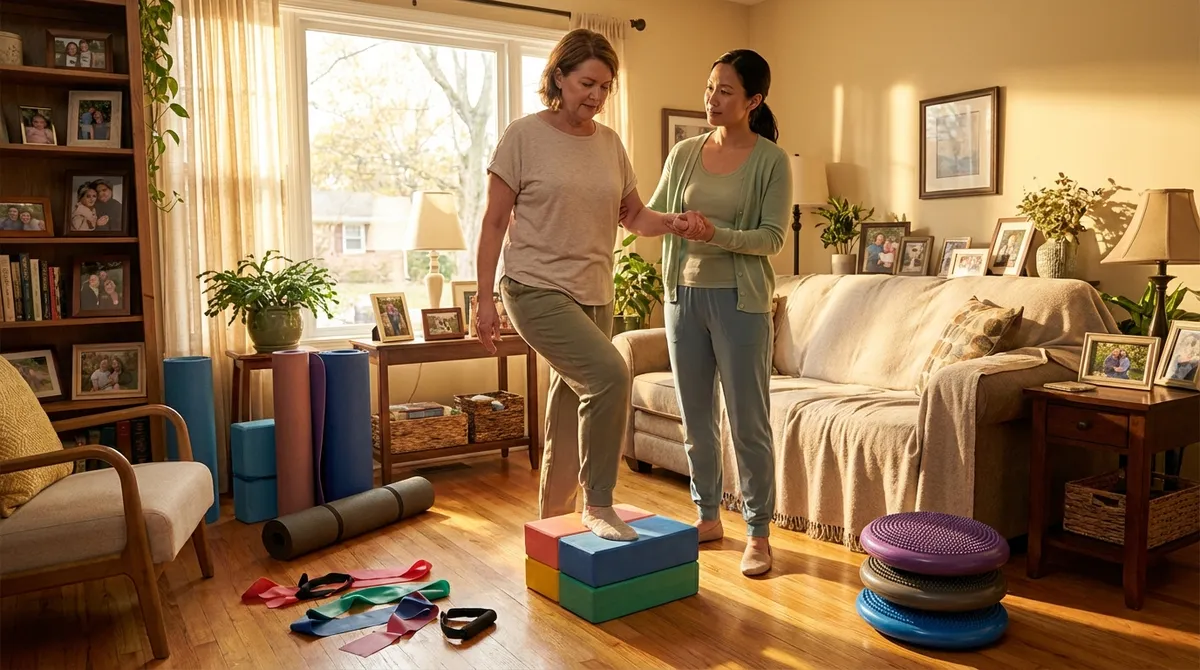
Physical Therapy as a Partnership, Not a Test
Physical therapy can sometimes feel intimidating—especially if you’re in pain, worried about your future, or feeling self‑conscious about what your body can (or can’t) do right now. It may help to see PT as a partnership instead of a performance. Your therapist isn’t grading you; they’re listening to your story, your goals, your fears, and your limits.
A good PT plan is built around your real life: your work, your family, your routines, and your energy. Sessions are less about “toughing it out” and more about discovering what movements your body can tolerate and slowly building from there. Progress isn’t always a straight line—some days you’ll feel strong, others you’ll feel frustrated. That’s normal. What matters is that you keep showing up for yourself, even when the steps forward feel small.
If you ever feel rushed or unheard, it’s okay to say, “This is too much,” or “Can we try another way?” Advocating for yourself is not complaining—it’s essential feedback that helps shape a plan that truly fits you. Physical therapy works best when you bring your questions, your honesty, and your hopes into the room.
Why Movement Matters (Even When You Don’t Feel Ready)
When you’re hurting or exhausted, “just move more” can sound dismissive or unrealistic. But therapeutic movement is different from pushing yourself past your limits. It’s about using targeted, thoughtful exercises to help your body heal, protect vulnerable areas, and gently rebuild strength and mobility.
Movement can improve blood flow to healing tissues, support joint health, and help your nervous system feel safer and less guarded. Over time, this can reduce pain and stiffness, and help you trust your body again. PT can also help you understand your pain better—what it means, what it doesn’t mean, and how to respond without fear taking over.
Small, consistent movement often works better than big, heroic efforts once in a while. Even a few minutes spread through your day counts. You’re not “starting over” each time; your body remembers. Every gentle stretch, every careful repetition, every mindful walk is a message to your body: “We’re still in this together.”
5 Gentle Wellness Tips to Support Your Physical Therapy Journey
Here are five supportive practices you can weave into your days alongside physical therapy. They’re not rules—think of them as options you can experiment with and adapt to your reality.
1. Turn Your Home Into a “Tiny Movement” Space
You don’t need a home gym to support your healing. Small, intentional changes can make your home more movement-friendly and PT‑supportive.
- Keep a resistance band, light dumbbell, or soft ball in a place you see often (like near the sofa or desk) as a visual reminder for brief exercise breaks.
- Pair tiny exercises with existing habits: a few heel raises while waiting for the kettle, gentle shoulder rolls before opening your laptop, or a slow stretch every time you stand up from the couch.
- If standing is difficult, try seated movements like ankle circles, marching in place while sitting, or squeezing a cushion between your knees.
These small doses add up. If your PT gives you exercises, ask how to break them into mini-sessions that fit your day instead of doing everything at once.
2. Use Pain as Information, Not as a Verdict
Pain can feel frightening, especially after an injury. But in many cases, pain doesn’t mean “damage is happening right now”—it means your body and nervous system are on high alert.
Here are some ways to relate differently to pain:
- Ask your PT to help you understand your “green light,” “yellow light,” and “red light” pain levels—what’s okay to work through, and what means you should stop or modify.
- Keep a simple note on your phone about activities and pain levels. Over time, you may notice patterns, like “More stiff after long sitting,” or “Short walk helped.”
- On harder days, adjust instead of quitting: reduce repetitions, shorten the range of motion, or choose an easier variation.
You’re not failing if something hurts. You’re gathering information you and your therapist can use to tailor your plan more safely and compassionately.
3. Protect Your Energy With Gentle Pacing
Healing isn’t just about what muscles you work—it’s also about how you manage your energy. Overdoing it on “good” days and crashing on “bad” days can make recovery feel like a roller coaster.
Try experimenting with pacing:
- Break tasks into smaller chunks with short rest periods in between, especially chores that ask a lot of your body (like laundry, vacuuming, or grocery runs).
- Use a simple timer to remind you to pause: for example, 25 minutes of activity, 5 minutes of rest and stretching.
- Remember that rest is an active part of recovery, not wasted time. REST can stand for “Recovery Enabling Steady Training.”
Talk with your PT about your weekly schedule—work, caregiving, appointments—so they can help you build a plan that respects your energy and not just your muscles.
4. Practice Kind Self-Talk While You Move
The way you speak to yourself during exercises matters. Harsh self‑criticism can make movement feel heavier, more discouraging, and sometimes even more painful.
You might try gently shifting your inner dialogue:
- Swap “I’m so weak” for “I’m rebuilding.”
- Change “This is useless” to “This is one small brick in a bigger foundation.”
- Replace “I should be farther along” with “I’m showing up, and that counts.”
You don’t have to fake positivity. Just aim for honest but kinder language. If you catch yourself being harsh, pause, take a breath, and see if you can rephrase it the way you would speak to a friend in your situation.
5. Build a Simple Support Circle Around Your Goals
Recovery is easier when you’re not trying to carry it alone. You don’t need a huge circle—just a few people or resources who help you stay connected to your goals.
Ideas for low-pressure support:
- Share one specific goal with a trusted friend or family member, like “I’m working on walking comfortably for 10 minutes” or “I’m trying to do my home exercises 3 days a week.”
- Ask someone to check in with a simple message: “How’s your body feeling today?”—not to judge, but to remind you that you’re not alone.
- If in-person support is hard to find, look for reputable online communities or patient education from health systems where people share experiences and coping strategies.
Support doesn’t have to be loud or public. Even one person who knows what you’re working through can help you feel seen and encouraged on days when motivation dips.
Staying Consistent When Progress Feels Slow
One of the hardest parts of physical therapy is sticking with it when the changes are subtle or slower than you hoped. You might wonder, “Is this even working?” It’s okay to feel impatient or discouraged. Those feelings don’t mean you’re giving up—they mean you care.
When progress feels slow, consider:
- Tracking “quiet wins” that don’t show up in big before-and-after photos: less stiffness in the morning, standing a little longer, one fewer pain spike this week, or feeling less afraid to move.
- Bringing your concerns to your PT. If something isn’t improving, your plan can be adjusted. You’re not complaining—you’re collaborating.
- Remembering that healing is rarely linear. Flare-ups, step-backs, and plateaus happen, especially with chronic conditions.
Every time you choose to do your exercise, modify a task to protect your body, or rest when you need it, you’re reinforcing a powerful message: “My well-being matters.” That mindset, sustained over time, is one of the most important parts of recovery.
Conclusion
Your path through physical therapy doesn’t have to look like anyone else’s. It can be gentle, flexible, and rooted in the reality of your life—not an idealized version of it. You’re allowed to move slowly. You’re allowed to have doubts. You’re allowed to ask for changes, adjustments, and explanations.
What matters is that you keep returning to your body with curiosity instead of judgment, and that you let support—professional and personal—meet you where you are. Healing is not about becoming a different person. It’s about reclaiming more comfort, confidence, and possibility in the body you live in today.
You’re not behind. You’re not too late. You’re already on the path, one intentional step at a time.
Sources
- American Physical Therapy Association (APTA) – Benefits of Physical Therapy - Overview of how PT supports recovery, function, and long-term health
- Mayo Clinic – Physical Therapy and Rehabilitation - Explains what to expect from PT and how it can help various conditions
- Cleveland Clinic – Chronic Pain: Treatment and Management - Discusses pain, pacing, and the role of movement and rehabilitation in managing symptoms
- Johns Hopkins Medicine – The Importance of Exercise in Rehabilitation - Describes how therapeutic exercise supports healing and function
- Centers for Disease Control and Prevention – Physical Activity Basics - Provides evidence-based guidance on movement and its health benefits