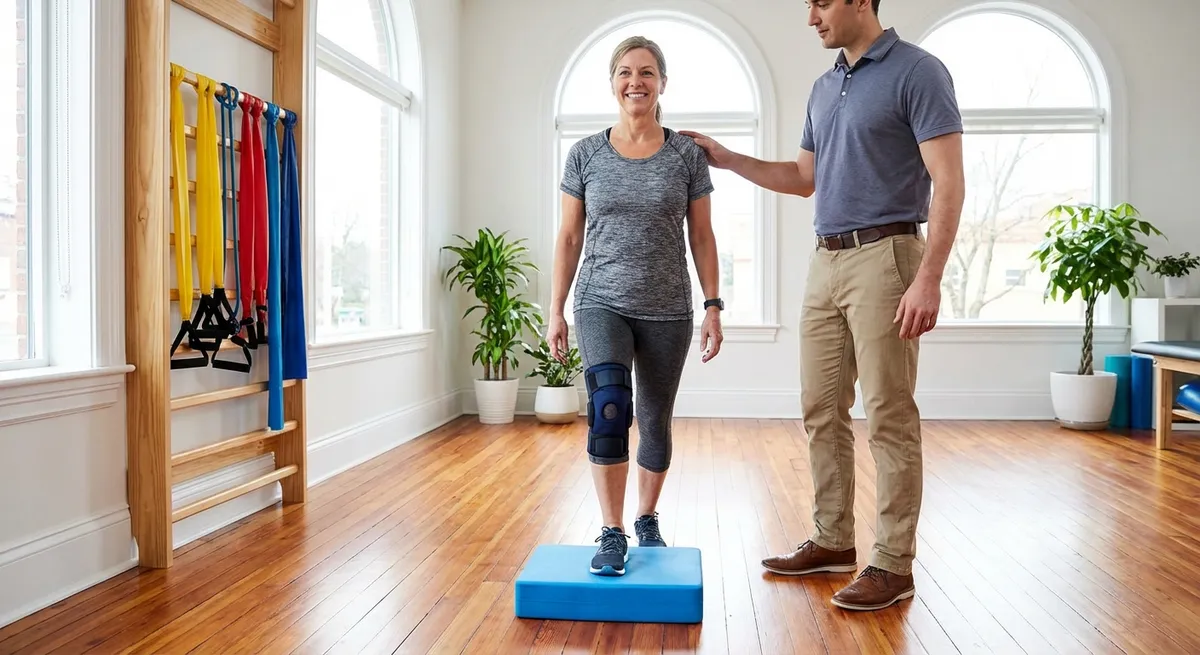
This is your reminder: progress in PT is not measured only in big breakthroughs. It’s also in the quiet choices you make every day—to move a little, to rest when needed, to ask for help, and to listen to your body with kindness instead of criticism.
Below are five supportive wellness tips to help you move through your physical therapy journey with more confidence, clarity, and compassion for yourself.
1. Treat Each Session as a Conversation With Your Body
Physical therapy isn’t punishment for being hurt or “out of shape.” It’s a structured conversation between you, your body, and your therapist. Instead of thinking, “I have to get through this workout,” try reframing it as, “I’m learning how my body feels and responds today.”
Notice what changes during and after a session: Where do you feel stronger? Where do you feel stiff or tender? What movements feel safer now than they did a few weeks ago? Bring these observations to your therapist—they’re valuable data, not complaints.
When you approach PT like a conversation, you:
- Stop viewing pain as failure and start seeing it as information.
- Become an active partner in your plan, instead of a passive participant.
- Build a more trusting relationship with your body, even when it’s not doing what you wish it would.
It’s okay if you feel nervous sharing your limits or fears. Honest communication helps your therapist adjust your exercises so they’re challenging but not overwhelming. You don’t have to “tough it out” to make progress; you just have to show up and tell the truth about how things feel.
2. Make “Repeatable” Your Goal Instead of “Perfect”
Many people begin PT feeling pressure to do everything exactly right, every time. But perfection is not the goal—consistency is. A slightly wobbly exercise you do three times a week will support your healing far more than a “perfect” workout you only do once.
When you’re practicing your home program, ask yourself:
- “Could I realistically repeat this routine three days this week?”
- “Do I need to shorten my session today to make it doable tomorrow?”
- “Would this feel more manageable if I broke it into two mini-sessions?”
Choose a version of your plan that you can repeat even on a busy or low-energy day. That might mean fewer repetitions, lighter resistance, or shorter time on your feet. Adjusting your plan to fit your real life is not “giving up”—it’s smart, sustainable healing.
Every time you complete even a shortened version of your exercises, you’re sending yourself an important message: “I can follow through.” That trust in yourself becomes just as valuable as any strength or flexibility gain.
3. Build a Gentle Support System Around Your Recovery
Healing is easier when you don’t feel like you’re carrying it alone. Your support system doesn’t have to be huge—it just needs to be intentional. Think about who and what helps you feel safe, encouraged, and grounded.
You might:
- Tell a trusted friend or family member what you’re working on in PT and ask them to check in once a week.
- Share with someone close that some days are harder than others and that you appreciate their patience.
- Ask your therapist for clear guidance on what’s safe, what to avoid, and what to expect—reducing the fear of “doing it wrong.”
- Create small rituals around your sessions: a favorite podcast on the way there, a calming stretch or breathing exercise after, or a nourishing snack when you’re done.
If you feel isolated, online communities, support groups, or condition-specific forums can remind you that you’re not the only one navigating this. Just remember: your body is unique. Use other people’s stories as encouragement, not comparison.
Having even one person who understands that you’re healing—not just “getting back in shape”—can change how you talk to yourself on difficult days. You’re allowed to lean on others while you rebuild your strength.
4. Let Rest Be Part of the Plan, Not a Sign of Weakness
Recovery is not a straight line, and your body sometimes needs time to catch up with the work you’re asking it to do. Rest is not the opposite of progress; it’s the space where your muscles, joints, and nervous system integrate the changes you’re making.
Instead of waiting until you’re completely exhausted or in significant pain, try planning rest into your week the way you plan your exercises. That might look like:
- Scheduling “lighter movement days” between more challenging sessions.
- Using recovery tools your therapist recommends—ice, heat, gentle stretching, short walks, or breathing exercises.
- Listening for early signs of fatigue, like shakiness, increased tension, or difficulty focusing, and taking that as a cue to ease up or pause.
It can be emotionally hard to rest when you’re eager to “get back” to your old life. But pushing too hard can create flare-ups that actually slow your progress. Choosing rest at the right time is a sign of wisdom, not weakness.
Give yourself permission to say, “Today my body needs less.” That kind of self-respect is part of healing, too.
5. Notice the Quiet Improvements, Not Just the Big Milestones
It’s tempting to measure progress only in dramatic wins: walking without a brace, lifting a certain weight, or finally getting through a full workday without major pain. Those moments matter—but they’re built on smaller, quieter changes that are easy to miss.
Start looking for subtle shifts:
- You can stand a little longer before needing to sit.
- An exercise that used to feel impossible now just feels “tough.”
- You recover faster after a busy day than you did a month ago.
- Your fear of a certain movement is slightly less than it used to be.
- You catch yourself thinking, “I think I can try this,” instead of, “I’ll never do that again.”
Consider writing down one small improvement each week, even if it feels insignificant. Over time, you’ll have a record that proves your efforts are adding up, even when day-to-day progress feels slow.
Your body may not change on the exact schedule you want—but that doesn’t mean it’s not changing. You’re allowed to celebrate every tiny gain along the way. Those “quiet wins” are not side notes; they’re the foundation of your long-term recovery.
Conclusion
Physical therapy isn’t just about fixing what hurts—it’s about learning how to move through your life with more confidence, patience, and compassion for yourself. You’re not behind. You’re not failing. You’re doing the brave, often uncomfortable work of rebuilding.
As you move forward, remember:
- Talk with your body, not against it.
- Aim for repeatable, not perfect.
- Let others support you; you don’t have to be strong alone.
- Honor rest as part of your healing, not proof you’re weak.
- Keep track of the quiet ways you’re improving—they count.
You’re allowed to go at your pace. You’re allowed to ask questions. And you’re absolutely allowed to be proud of yourself for showing up, even on the hard days. Healing isn’t always loud or fast—but it is happening, one intentional step at a time.
Sources
- American Physical Therapy Association (APTA) – Benefits of Physical Therapy - Overview of how physical therapy supports recovery, mobility, and long-term health
- Mayo Clinic – Physical Therapy and Rehabilitation - Explains what to expect in PT, including personalized plans and the role of activity and rest
- Cleveland Clinic – Rehabilitation: What It Is, What to Expect - Describes the rehabilitation process, goal setting, and the importance of gradual progress
- Johns Hopkins Medicine – Safe Return to Exercise After Injury - Offers guidance on pacing, rest, and monitoring symptoms during recovery
- National Institutes of Health (NIH) – Coping With Chronic Pain - Provides insight into pain, the nervous system, and strategies to manage pain during healing