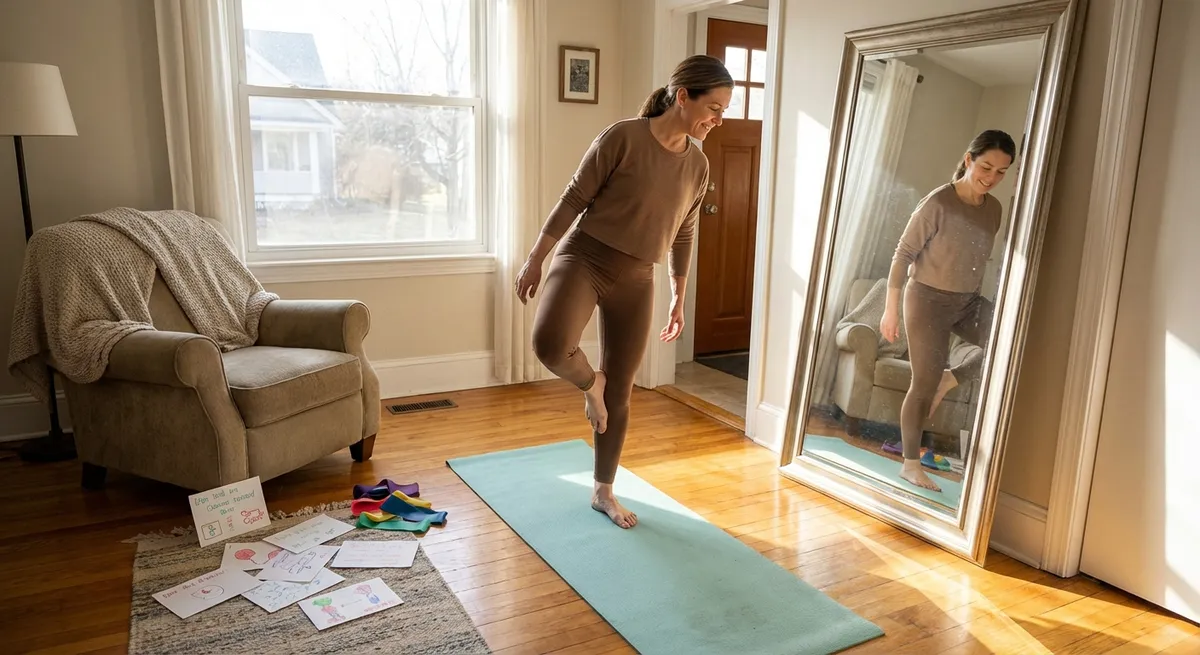
This isn’t about perfect form, perfect progress, or perfect motivation. It’s about small decisions that help your body feel safer, more supported, and more capable over time.
Seeing Physical Therapy as Partnership, Not Perfection
Working with a physical therapist can feel different from meeting other healthcare providers. Instead of a quick appointment and a prescription, you’re building a working partnership over time. Your story, your routines, your fears, and your goals all matter.
A good PT doesn’t just watch how you move; they help you understand why certain movements feel hard, painful, or scary. They look at the big picture—your joints, muscles, nervous system, breathing patterns, and even your daily habits. Many people worry they’re “too out of shape” or “too far gone” for therapy to help, but PT is designed to meet you exactly where you are, not where you think you “should” be.
As you go through sessions, you might notice your PT celebrating tiny wins you barely register: improved balance when turning, a smoother step, less tension in your shoulders, or being able to get out of a chair with less effort. These aren’t small; they’re the building blocks of a new relationship with your body.
When you start seeing your PT as a teammate rather than a judge, it becomes easier to ask honest questions:
“How much pain is okay?”
“What if I’m scared to move that way again?”
“Can we slow this down today?”
Those questions don’t make you difficult. They make you engaged—and that’s where change really starts.
Your Nervous System Is Listening Too
Physical therapy isn’t just stretching muscles and strengthening joints. Your nervous system—your brain, spinal cord, and network of nerves—is constantly involved in the way you move and how you feel pain.
When you’ve been injured or in pain for a long time, your nervous system can become extra protective. Movements that used to feel neutral might now feel tense, shaky, or painful. You might notice yourself bracing before you even start to move—tightening your shoulders, holding your breath, clenching your jaw.
PT can gently retrain your nervous system to feel safer again. Slow, controlled repetition tells your brain, “This movement is okay. We can do this,” especially when paired with supportive breathing and pacing. Over time, your brain may turn the alarm volume down on movements it once flagged as dangerous.
This is why you might hear your PT talk about “graded exposure” or “tolerance.” They’re not asking you to push through everything; they’re helping your body and brain renegotiate what “safe” movement looks like now. That process takes time, and there is nothing weak or wrong about needing that time.
If you notice fear, frustration, or anger coming up during exercises, that’s also part of the story—and worth sharing with your PT. Emotions are not separate from healing; they’re often a sign that your nervous system is deeply involved in your journey.
5 Gentle Wellness Tips to Support Your PT Journey
You don’t have to overhaul your life to support your physical therapy work. Small, thoughtful choices can create a more healing-friendly environment for your body. Here are five gentle wellness tips you can adapt to your own pace and situation.
1. Turn Your Home Into a “Micro-Movement” Space
Instead of thinking of exercise as a big event you have to plan for, try threading tiny movements throughout your existing routine. These don’t replace your PT program, but they make it easier for your body to stay engaged between sessions.
You might:
- Do your ankle pumps or toe curls while brushing your teeth.
- Practice gentle shoulder rolls while waiting for the kettle or coffee to brew.
- Stand up and sit down from your chair slowly a few times every hour (if your PT says this is safe for you).
- Use a wall or countertop for supported calf stretches during everyday tasks.
Micro-movements allow you to participate in your own healing without needing an hour of dedicated time or a fully stocked home gym. They remind your body, “We move now. We participate now,” in ways that feel realistic, not overwhelming.
If you’re unsure which movements are safe, bring this idea to your PT and ask: “What are a few tiny actions I can sprinkle into my day?”
2. Let “Better” Replace “Perfect” in Your Mindset
Many people feel like they’ve failed physical therapy if they miss a day of exercises or can’t keep up with a specific routine. That all-or-nothing thinking can quietly stall progress and increase shame.
Instead, try this mindset shift: “Better than nothing still counts.”
Maybe:
- You do one round of your exercises instead of three.
- You walk for five minutes instead of the 15 you hoped for.
- You stretch in bed because getting up feels like too much today.
These are not failures; they are adapted wins. Your body doesn’t operate on a pass/fail system. It responds to what you do, not what you meant to do.
On days when you feel discouraged, ask:
“What is the smallest version of this I can manage today?”
Then let that be enough. You’re building a sustainable relationship with movement—not auditioning for a competition.
3. Build a Pain Plan Before the Hard Days Hit
Flare-ups, bad days, and setbacks can make you feel like everything you’ve worked for is slipping away. It can be grounding to have a simple “pain plan” ready for those moments so you’re not making decisions from a place of panic or frustration.
With your PT or healthcare provider, you can create a written plan that might include:
- Which movements to avoid temporarily and which gentle motions are still okay.
- Position changes or resting postures that usually help (like lying with your legs elevated, or supported side-lying).
- Safe comfort strategies: heat or ice (and how long), gentle self-massage, or supported breathing.
- When to scale your exercises down, skip them, or contact your provider.
Having a plan doesn’t prevent tough days—but it can give you a map when you feel lost in them. It also reinforces an important message: a setback does not erase your progress; it just asks for a different kind of care today.
4. Use Breath as a Built-In Support Tool
Your breathing patterns can directly influence muscle tension, pain perception, and how steady or unsteady a movement feels. When you hold your breath during a movement, your body may interpret that as stress or danger, which can increase tension and discomfort.
Try pairing your PT exercises with intentional breathing:
- Inhale gently before or as you start an easier part of a movement.
- Exhale slowly during the effort (like standing up, lifting, or stepping).
- Pause afterward for one relaxed breath before repeating.
- Place a hand on your ribcage or abdomen.
- Inhale through your nose for about 3–4 seconds.
- Exhale through your mouth for 4–6 seconds.
- Repeat 4–6 times, noticing if any part of your body softens, even slightly.
You can also use “check-in breaths” throughout your day:
Breathing won’t “cure” everything, but it can reduce your baseline tension and give your nervous system a consistent reminder: “We’re safe enough to breathe here.”
5. Track Wins That Aren’t Just About Pain Levels
Pain is important, but it isn’t the only indicator of progress. Sometimes your pain might stay similar for a while, even as your body quietly gains strength, coordination, or endurance. If you only measure success by “less pain,” you may miss the ways you’re actually improving.
Try tracking a few other markers, such as:
- How long you can stand, walk, or sit comfortably before needing a break.
- How steady you feel when changing direction or stepping off a curb.
- How easy it is to get in and out of bed, the car, or a chair.
- How many stairs you can climb or how much you can carry safely.
- How confident you feel trying a movement that once felt scary.
You might jot these down in a notebook or notes app once or twice a week. Then, when you hit a slump, you and your PT can look back and say, “Yes, this is hard—and also, look at how far you’ve come in other ways.”
This doesn’t minimize your pain; it expands your definition of progress so your effort gets the recognition it deserves.
Bringing It All Together: You’re Allowed to Take Up Healing Space
Your healing journey doesn’t need to look heroic from the outside to matter deeply on the inside. Every time you show up to an appointment, ask a question, attempt an exercise, or choose rest over self-criticism, you’re practicing something powerful: you’re allowing yourself to take up healing space in your own life.
Physical therapy can be one steady hand on your shoulder during a season that feels uncertain or exhausting. Your PT is there to guide, adjust, and encourage—but you are the one living in this body day to day. That means your observations, hesitations, and hopes all belong in the room.
You’re not behind. You’re not broken. You’re a person in process, learning how to move through the world again in a way that honors both your limits and your possibilities.
If today all you can do is read this and consider one small change, that’s still movement. Your body heard you show up—and that counts.
Sources
- American Physical Therapy Association (APTA) – Benefits of Physical Therapy - Overview of how physical therapy supports recovery, function, and long-term health
- Mayo Clinic – Chronic Pain: Symptoms and Causes - Explains how chronic pain affects the body and nervous system
- Cleveland Clinic – Graded Exercise Therapy & Activity Pacing - Describes gradual, structured activity approaches often used in rehab
- Harvard Health Publishing – The Healing Power of Breath - Discusses how controlled breathing can support relaxation and stress reduction
- National Institutes of Health (NIH) – Physical Activity and Your Health - Reviews how regular movement supports function and well-being, especially during aging and recovery