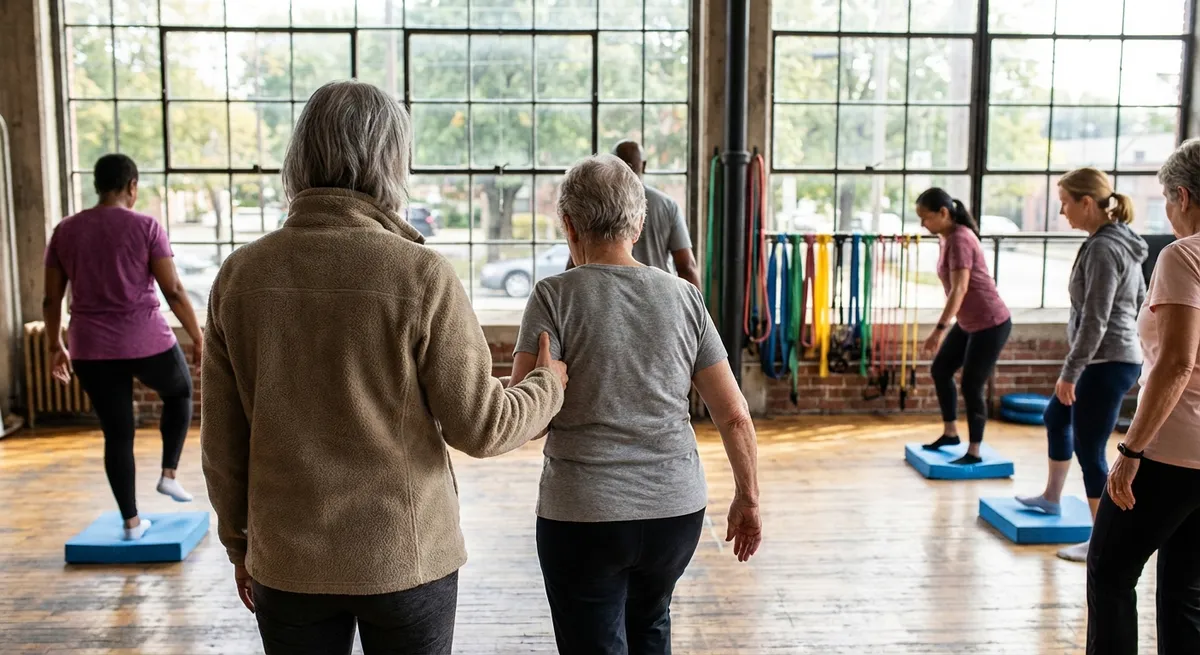
This article offers gentle, realistic support for your PT journey, along with five practical wellness tips that can make the process feel more doable and less overwhelming.
Seeing Physical Therapy as Partnership, Not Perfection
Physical therapy isn’t about becoming a “perfect” version of yourself—it’s about learning how your body works today, and what it needs to feel a little better tomorrow.
A good PT plan is a partnership between you, your therapist, and your daily life. That means your work schedule, family responsibilities, energy levels, and mental health all matter. The best exercises are the ones you can actually do and sustain, not the ones that look impressive on paper.
It’s completely normal to:
- Progress more slowly than you expected
- Have flare-ups or setbacks
- Feel discouraged or frustrated at times
- Need your plan adjusted several times
None of that means you’re failing. It means you’re human—and your body is giving feedback. Physical therapy is often less about “pushing harder” and more about “listening closer” and adjusting with care.
Tip 1: Turn Your Home Into a Quiet PT-Friendly Space
You don’t need a home gym to make progress. What you do need is a space where your body and mind feel safe enough to focus.
Consider:
- Choosing a consistent spot (a corner of your living room, beside your bed, or a hallway wall) so your brain starts to associate that area with “healing time.”
- Keeping essentials within reach: a folded towel, resistance band, water bottle, and a small notebook to track what you did and how it felt.
- Reducing distractions where possible. Silence your phone if you can, or use calming music or a podcast if silence feels uncomfortable.
- Making comfort a priority: supportive shoes or bare feet on a non-slip surface, a chair or counter for balance, and good lighting so you can see how you’re moving.
Your setup doesn’t have to be Instagram-worthy. It just needs to be “good enough” to help you show up regularly. A simple, stable routine will beat an elaborate, unsustainable plan every time.
Tip 2: Use Micro-Sessions When Motivation Is Low
If a full 30-minute session feels impossible, you are not alone. Life, pain, fatigue, and mood can all shrink your capacity. Instead of giving up completely on rough days, experiment with “micro-sessions.”
You might try:
- 5 minutes in the morning: gentle range-of-motion or stretching while your coffee brews.
- 3 minutes mid-day: one balance exercise, or standing heel raises while you wait for food to heat up.
- 5 minutes in the evening: one or two key PT exercises plus a bit of deep breathing.
Tell yourself: “Something counts.” Consistency often matters more than duration. Micro-sessions help your brain stay connected to the identity of someone who is still trying, still engaged, still moving forward—even when life is heavy.
And here’s an important truth: stopping for a while doesn’t erase your progress. When you return, your body remembers more than you think.
Tip 3: Track How You Feel, Not Just What You Can Do
It’s easy to measure progress only in numbers—how far you can walk, how much weight you can lift, your pain score, or how many repetitions you can finish. Those are useful, but they’re just one part of the picture.
Try also noticing:
- How your body feels during and after an exercise
- Whether daily tasks (stairs, groceries, getting in/out of the car) feel slightly easier
- If your recovery time after activity is changing
- How your mood, sleep, or confidence shifts over time
A simple log might include:
- Date
- What you did (exercises, walking, stretching)
- Pain or discomfort (0–10) before and after
- One sentence about how it felt (“Knee a bit sore, but stairs felt easier than last week.”)
These softer, more personal milestones often show progress long before test numbers change. They also give your physical therapist real-world data to help refine your plan.
Tip 4: Build a Support Circle That Understands the Journey
Recovering in isolation can feel heavier than it needs to. Even a small circle of support can make a meaningful difference.
Consider:
- Talking openly with one trusted person about what you’re going through—your fears, your hopes, your frustration. You don’t need to be “positive” all the time to be worthy of support.
- Letting close friends/family know one specific way they can help: a ride to therapy, a check-in text after tough sessions, or company during a walk.
- Connecting with others who have similar conditions through local groups or reputable online communities. Shared experiences can normalize what you’re feeling and offer practical tips.
- Including your PT in your support system by being honest about what you’re actually doing at home, what feels too hard, and what feels surprisingly okay.
Healing is still your journey, but you don’t have to carry every piece of it alone. Support doesn’t erase the hard parts, but it can make them more bearable.
Tip 5: Let Rest and Compassion Be Part of the Plan
Pushing nonstop is not the same as healing. Your tissues, nervous system, and mind all need cycles of effort and rest. Ignoring this can lead to flare-ups, burnout, or the feeling that “nothing is working.”
You can practice compassionate rest by:
- Scheduling lighter days into your routine instead of waiting until you’re completely wiped out.
- *Viewing rest as an active part of the plan, not as “doing nothing.” Recovery time is when your body processes the work you’ve done.
- Checking in with your self-talk: Are you calling yourself “lazy” or “weak” when you need a break? Try replacing that with: “I’m listening to my body so I can keep going tomorrow.”
- Letting your PT know when you feel overworked* or more sore than expected. Together you can adjust intensity, frequency, or exercise selection.
Self-compassion doesn’t mean giving up. It means you’re choosing a sustainable pace that respects the fact that healing is work—physical, emotional, and mental.
Conclusion
Your physical therapy journey is not a test you pass or fail. It’s a process of learning how to live inside your body again with a little more ease, a little more trust, and a little more hope.
Some days, “doing your best” might look like completing your full home program. Other days, it might look like one gentle stretch, a short walk to the mailbox, or simply choosing not to give up on yourself.
Each effort—tiny or large—is a vote for the future you’re building.
You’re allowed to go slowly. You’re allowed to adjust. And you’re absolutely allowed to keep believing that progress is still possible, even if today’s step forward feels small.
Sources
- American Physical Therapy Association (APTA) – Benefits of Physical Therapy – Overview of how physical therapy supports recovery, mobility, and pain management
- Mayo Clinic – Physical Therapy and Rehabilitation – Explains what to expect from PT, types of therapies, and how they help various conditions
- Cleveland Clinic – Physical Therapy: Conditions Treated & What to Expect – Provides detailed information on PT approaches, goals, and patient education
- Johns Hopkins Medicine – Importance of Exercise and Movement in Recovery – Discusses the role of movement and gradual activity in overall health and rehabilitation
- National Institutes of Health (NIH) – Self-Management and Chronic Pain – Offers evidence-based insight into managing pain, pacing, and staying engaged in your own care