This isn’t about perfection. It’s about noticing what’s possible today—and allowing that to be enough.
Physical Therapy as a Safe Place to Begin Again
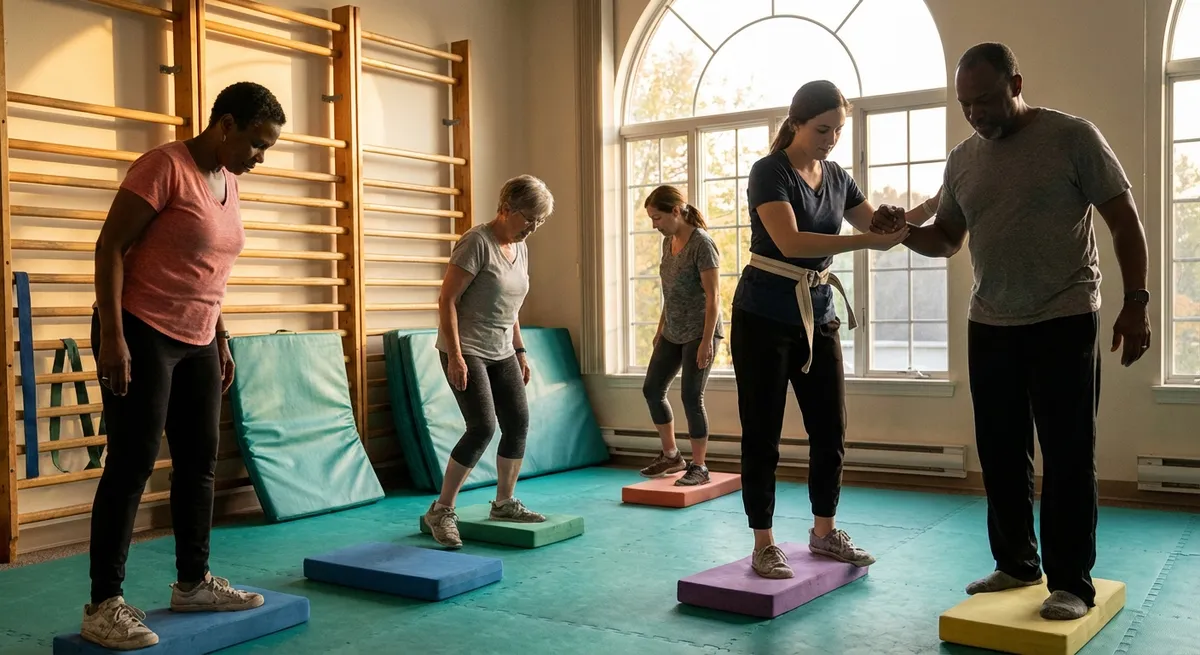
Physical therapy is more than exercises, resistance bands, and clinic visits. At its best, it’s a structured, compassionate way to relearn how your body can support you. A PT doesn’t just look at a sore knee or stiff back; they consider how you move, how you live, what matters to you, and what you hope to get back to—whether that’s running a 5K or simply standing at the kitchen counter without fatigue.
Sessions may include hands-on techniques to reduce pain or improve mobility, personalized exercise plans to build strength, and education so you understand what’s happening in your body. For many people, just having a clear explanation—“this is why it hurts, and here’s what we can do about it”—can ease a lot of fear.
If you’ve tried to “just push through it” and ended up discouraged or more uncomfortable, you’re not alone. PT offers a different approach: gradual, intentional change guided by someone whose goal is not only your recovery, but your confidence. Progress might look quiet from the outside—a little more range of motion, one less pain flare this week—but those “small” shifts add up to a body and a life that feel more like yours.
Your Healing Pace Is Still a Valid Pace
One of the hardest parts of recovery is feeling like you’re “behind.” Maybe others bounced back faster. Maybe you feel like you should be further along. That story in your head can be tougher than any exercise your therapist gives you.
Here’s what’s true: your timeline is your own. Pain levels, previous injuries, other health conditions, work demands, caregiving roles, sleep, and stress all influence how you heal. Comparing your journey to someone else’s doesn’t make you heal quicker; it just drains your energy.
Physical therapy can help you set realistic expectations with clear markers of progress that aren’t just “all better or nothing.” Examples of progress might include:
- Needing fewer breaks to do the same task
- Sleeping a bit more comfortably than last month
- Noticing pain doesn’t spike as quickly with movement
- Feeling more steady or confident walking on different surfaces
Your therapist can help you track these changes so you aren’t relying on memory alone on the hard days. Remember: healing is rarely a straight line. A setback doesn’t erase the work you’ve done—it just means your body is asking for a different kind of support right now.
Five Supportive Wellness Tips to Pair With PT
Physical therapy doesn’t live in isolation. What you do between sessions—how you rest, move, think, and care for yourself—can gently amplify your progress. These five wellness tips are small enough to feel doable, but meaningful enough to support real change.
1. Turn Your Home Into a “Friendly Movement” Space
You don’t need a home gym to support your body; you just need an environment that makes movement easier, not harder. Consider little tweaks like:
- Keeping your PT handout or digital exercise plan in a visible place
- Leaving resistance bands or a small weight where you naturally pause (like near the couch or desk)
- Clearing walking paths so you can move safely, especially if you’re working on balance or gait
- Adjusting frequently used items (pots, books, laundry supplies) to waist height so you’re not constantly bending or reaching overhead
These small adjustments reduce the friction between “I should do my exercises” and actually doing them. Every time your surroundings remind you, “Movement is welcome here,” you’re more likely to follow through—even for a few minutes at a time.
2. Use a Gentle Routine Instead of All-or-Nothing Goals
On tough days, long exercise routines can feel impossible. Instead of aiming for perfect, aim for consistent. Create a simple, flexible rhythm for your PT work:
- Pick a “bare minimum” version of your routine (for example, 2–3 key exercises or 5 minutes of gentle stretching).
- Decide on a time anchor—after breakfast, before your favorite TV show, or right after work.
- On low-energy days, honor the bare minimum. On better days, you can add more.
By designing a routine that already expects your energy and pain to fluctuate, you remove the pressure to “fail” or “give up.” Keeping the door open for smaller efforts is often what keeps you moving forward.
3. Let Your Breath Be Part of the Therapy
Pain, stress, and fear of movement often show up in your breathing—shallow, rushed, or held. Integrating simple breath work into your PT exercises can reduce tension and give your nervous system a calmer baseline to heal from.
You might try:
- Inhaling slowly through your nose for a count of 3–4
- Exhaling gently through pursed lips for a count of 4–6
- Pairing exhale with the effort part of a movement (like lifting a leg or standing up)
Your breath becomes a built-in reminder: “I’m safe. I’m allowed to move this way.” Over time, this can make formerly scary or painful movements feel more approachable, one calm repetition at a time.
4. Celebrate Functional Wins, Not Just Fitness Milestones
Traditional fitness culture often focuses on numbers: how much you lift, how far you walk, how long you work out. In physical therapy, different wins matter just as much—often more.
Consider keeping a simple “function log” once a week:
- What felt a little easier this week? (Carrying groceries, climbing stairs, turning your head while driving, getting off the floor, playing with a child or pet)
- What hurt a bit less than usual?
- Where did you feel even slightly more confident in your body?
Writing these down gives you something concrete to look back on when progress feels invisible. It also helps you and your therapist fine-tune your plan based on what matters most in your daily life, not just what looks good on paper.
5. Invite Support—You Don’t Have to Be the Only One Cheering
Recovery can feel isolating, especially when your limitations aren’t always visible to others. You deserve support that goes beyond “let me know if you need anything” (which is easy to say and hard to respond to).
If it feels safe, try:
- Letting a trusted friend or family member know your current PT focus (“I’m working on walking longer without pain,” or “I’m trying to build strength to get off low chairs more easily”).
- Asking for one specific type of help—like a weekly check-in, a ride to appointments, or company for a short walk.
- Sharing a small win with someone who will genuinely celebrate it, even if it seems “minor” from the outside.
Creating this kind of support network can boost motivation, reduce stress, and remind you that you’re not doing this alone. The more emotionally supported you feel, the more bandwidth you’ll have to stay consistent with your physical therapy plan.
When Motivation Fades: Staying Kind to Yourself
There will be days when you don’t want to do a single exercise. Days when pain feels louder than progress. Days when your body feels like a stranger. None of that means you’re failing.
On those days, try zooming out:
- Ask yourself: “What version of care is realistic today?” Maybe it’s ice or heat, a few minutes of stretching, or simply resting without guilt.
- Remind yourself: One missed session doesn’t erase your progress. Your body still remembers the movement you’ve been practicing.
- Reach out to your PT if you’re discouraged—they can help adjust your plan so it fits better with where you are right now.
Your relationship with your body is being rebuilt repetition by repetition. Some of those repetitions are physical exercises; others are the moments you choose compassion over criticism. Both matter.
Conclusion
You don’t have to wait to be “fixed” to start feeling proud of your effort. Every appointment you keep, every exercise you attempt (even if you don’t finish it), every time you choose rest instead of pushing past pain is a vote for your future self.
Physical therapy is not about becoming someone different—it’s about returning to yourself with a little less fear, a little more strength, and a lot more understanding of what your body needs. Steady steps count. Gentle effort counts. You count.
However your journey looks right now, you’re allowed to move forward at the pace that honors your body and your life. That is still progress, and it is absolutely worth protecting.
Sources
- American Physical Therapy Association (APTA) – Benefits of Physical Therapy - Overview of how physical therapy helps manage pain, improve mobility, and support recovery
- Mayo Clinic – Physical Therapy and Rehabilitation - Explanation of what to expect from PT, including common techniques and goals
- Cleveland Clinic – Physical Therapy: What It Is & What To Expect - Detailed guide on how PT works, conditions it treats, and patient education
- National Institutes of Health (NIH) – Pain and the Mind-Body Connection - Discusses how pain, stress, and perception interact, supporting the value of breathing and relaxation techniques
- Harvard Health – The Importance of Staying Active When You Have Pain - Explains how safe movement and graded activity can reduce pain and improve function