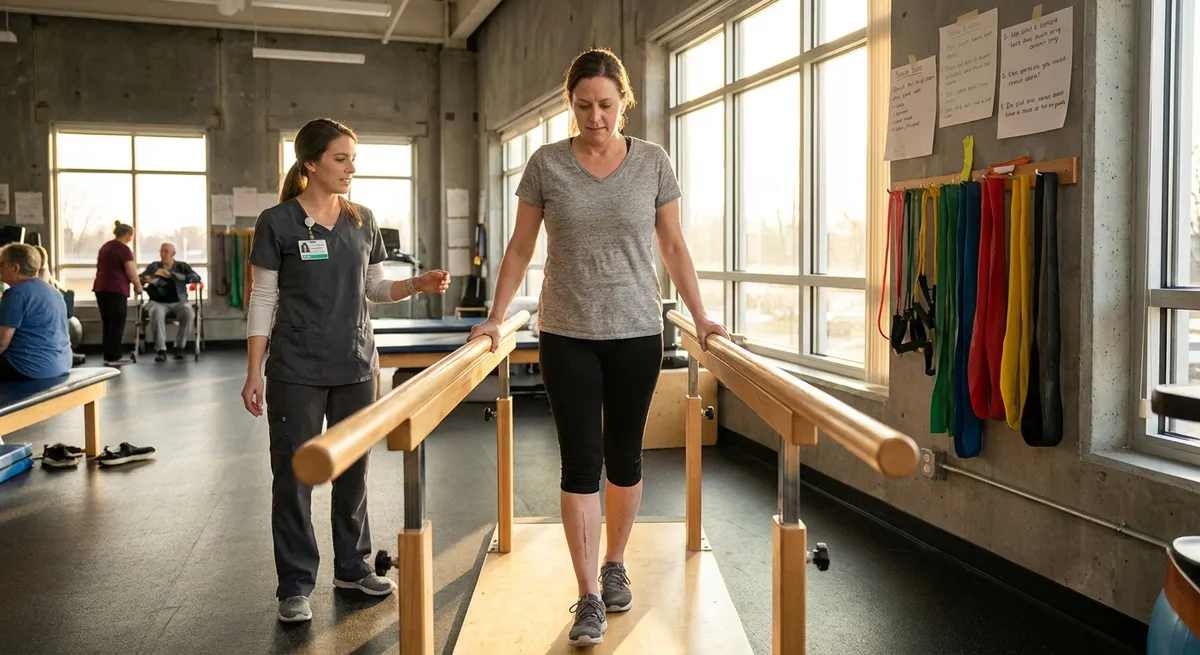
This isn’t about perfection or “pushing through.” It’s about learning how to move again in a way that feels safe, sustainable, and truly yours. Let’s talk about how to make physical therapy feel less like a chore and more like a daily act of self-respect—plus five wellness tips to support you along the way.
Making Physical Therapy Part of Your Real Life
Physical therapy isn’t only about exercises on a printed sheet. It’s about helping you return to the life you want to live—walking your dog, lifting your child, climbing stairs without fear, or simply waking up with less stiffness. When you think of PT as “life training” instead of just “rehab,” it starts to feel more meaningful.
Instead of focusing on what you used to do, try anchoring your motivation to what you want to do next. Maybe that’s standing long enough to cook a meal, sitting through a movie comfortably, or going back to a favorite hobby. Share those goals with your physical therapist—even if they feel small or “silly.” They’re not. They’re your reasons, and that makes them powerful.
It’s normal to feel frustrated when your body doesn’t cooperate, especially if you’re recovering from surgery, injury, or a chronic condition. But progress in physical therapy is often measured in quiet, almost invisible ways: one less sharp twinge when you move, one extra step before you need a break, one exercise that suddenly feels easier. These are signs that your nervous system, muscles, and joints are slowly learning a new, safer way to move.
When you hit days where your body feels heavy and motivation is low, you’re not failing. You’re human. On those days, your “win” might simply be showing up, doing a gentler version of your plan, or being honest with your therapist about how you’re really feeling. That honesty is part of your treatment too.
Tip 1: Turn Your Home Into a Gentle Support System
Your environment can make or break your healing habits. Instead of relying on willpower alone, let your space quietly remind you of the path you’re on.
Keep your PT tools visible and reachable: a resistance band by the couch, your foam roller near your bed, a folded towel where you usually stretch. When everything is packed away, exercises stay “out of sight, out of mind.” But when your tools are already in your daily line of vision, it’s easier to do something, even on low-energy days.
If certain rooms or chairs always lead to slouching or pain, see what you can adjust. Maybe that means adding a small lumbar pillow, raising your screen, or using a footrest. These aren’t just comfort hacks—they reduce strain and help your PT work last longer.
You can also create a tiny “reset corner”: a space where you can do two or three go-to exercises or stretches. It doesn’t have to be fancy. A yoga mat in a quiet spot, a wall to lean on, and a chair for balance work is enough. When you walk past that space, think of it as an invitation, not an obligation.
Your home doesn’t need to look like a gym to support your healing. Small, thoughtful changes can turn it into a place that gently nudges you toward movement instead of pulling you back into old patterns.
Tip 2: Celebrate Micro-Progress, Not Just Milestones
It’s easy to get discouraged if you’re only looking for big, dramatic changes. But physical therapy progress often shows up in quieter ways long before you reach your main goal.
You might notice:
- Getting out of a chair feels smoother than it did last month
- You can hold a position for a few more seconds than before
- You understand your body’s warning signs earlier and can adjust
- An exercise that used to scare you now feels manageable
These are not “almost wins”—they are wins.
Try keeping a simple progress journal: a few lines after a session to note what felt a tiny bit easier, where you felt steadier, or what you learned about your body. On days when you’re convinced “nothing is changing,” this record can show you that change is happening—just in smaller, steady waves.
If journaling isn’t your style, use your phone. Take a short video of a movement every couple of weeks (like squatting, lifting your arms, or walking down a hallway). Comparing them over time can reveal improvements you didn’t notice in the moment—better posture, smoother steps, less guarding.
Give yourself permission to celebrate things like:
- “I didn’t skip my home exercises this week.”
- “I stopped when my body asked me to, instead of pushing through pain.”
- “I asked my therapist a question I was embarrassed to ask.”
These are signs that you’re not just doing PT—you’re building a healthier relationship with your body.
Tip 3: Pair Movement With Something You Enjoy
Healing is easier to stick with when it doesn’t feel like punishment. If your exercises only live in a box labeled “things I have to do,” motivation will naturally fade. Pairing them with something pleasant can help your brain associate PT with calm, comfort, or even enjoyment.
Examples:
- Do your stretches while listening to a favorite podcast or calming playlist.
- Set up your exercises near a window with sunlight or a view, instead of in a dark corner.
- Turn a short walk into a “sensory check-in”: notice what you see, smell, and hear, not just how your body feels.
- Save a favorite show or audiobook as your “PT-only” treat—something you only enjoy while doing light exercises, if that feels supportive rather than pressuring.
The goal isn’t to distract yourself so much that you ignore pain signals; it’s to soften the emotional load of rehab. When your nervous system feels safer and less stressed, your body is often more willing to move, stretch, and strengthen.
If movement feels scary because of past pain or injury, combining PT with something soothing—a warm cup of tea before you start, a short breathing exercise afterward, or a comforting routine—can reassure your system that you’re safe, even as you challenge your body in small ways.
Honoring your comfort doesn’t mean you’re “not trying hard enough.” It means you’re working with your body, instead of against it.
Tip 4: Learn Your “Yellow Lights” and Honor Them
Your body has its own traffic light system: green (go), yellow (proceed with caution), and red (stop). Many people are taught to ignore the yellow light until it turns bright red pain. But in physical therapy, learning to respect your “yellow lights” can protect your progress.
Yellow lights might look like:
- A dull ache that lingers after a certain movement
- Tightness that shows up halfway through your walk
- Feeling unusually wobbly or fatigued during an exercise you usually handle well
- A sense of “something’s off,” even if it doesn’t hurt yet
- Slow down or reduce the intensity
- Take a longer rest between sets
- Do fewer repetitions
- Switch to a gentler variation your therapist recommended
Instead of pushing past these signals, treat them as valuable information. You might:
Write down these yellow-light moments and share them at your next PT session. Your therapist can often adjust your plan, tweak your form, or explain what’s safe discomfort and what needs more caution.
Knowing your body’s early warning signs doesn’t make you weak; it makes you wise. This skill stays with you long after formal therapy ends and can help you stay more active, with fewer flare-ups.
Tip 5: Stay Connected—You Don’t Have to Do This Alone
Healing can feel isolating, especially when your life looks different from before: fewer activities, more appointments, and a body that doesn’t always cooperate. But you don’t have to carry all of this by yourself.
Start with your care team. If something doesn’t make sense, you’re confused about an exercise, or you’re scared of re-injury, speak up. Your therapist’s job isn’t just to hand you exercises—it’s to help you understand what’s happening and why. There are no “silly” questions when it comes to your health.
Support can also come from outside the clinic:
- A friend who texts you after appointments to ask how it went
- A family member who walks with you during your “homework” exercises
- An online or local support group for people recovering from similar injuries or surgeries
Sharing your wins and struggles out loud can make them feel more real—and more manageable. You might also learn simple adaptations, pacing strategies, or encouragement from people who genuinely understand the ups and downs of recovery.
If you feel emotionally drained, anxious, or low as you move through rehab, that’s not a personal failure; it’s a human response to a big change. Talking with a mental health professional, counselor, or support group can help you carry both the physical and emotional weight of recovery more gently.
You’re not “too much” for needing support. You’re rebuilding, and rebuilding often takes a village.
Conclusion
Physical therapy isn’t just about joints, muscles, and exercises—it’s about reclaiming pieces of your life, one careful step at a time. Some days you’ll feel strong and hopeful. Other days you may feel tired, sore, or discouraged. Both kinds of days belong to your healing story.
You’re allowed to go at your pace. You’re allowed to rest without quitting. You’re allowed to ask for help, adjust your plan, and celebrate the tiniest changes as the victories they are.
Every time you choose to show up—for your exercises, for your appointments, for your own wellbeing—you’re practicing everyday courage. And that courage, repeated over time, is exactly what builds a stronger, more trusting relationship with your body.
You’re not behind. You’re on your way.
Sources
- American Physical Therapy Association (APTA) – ChoosePT – Educational resources on the benefits of physical therapy, types of conditions treated, and how PT supports daily function.
- Mayo Clinic – Physical Therapy and Rehabilitation – Overview of what to expect in physical therapy, including common approaches and goals.
- Cleveland Clinic – Physical Therapy: What It Is & What to Expect – Detailed explanation of physical therapy, safety considerations, and patient guidance.
- Centers for Disease Control and Prevention (CDC) – Physical Activity Basics – Evidence-based guidance on safe movement, activity pacing, and health benefits of regular activity.
- Harvard Health Publishing – How to Set Realistic Fitness Goals – Practical advice on goal-setting and tracking progress that can be adapted to physical therapy and rehab journeys.